a work of fan fiction
Mayberry
A homecoming and a reckoning. Grounded rural noir, played straight.
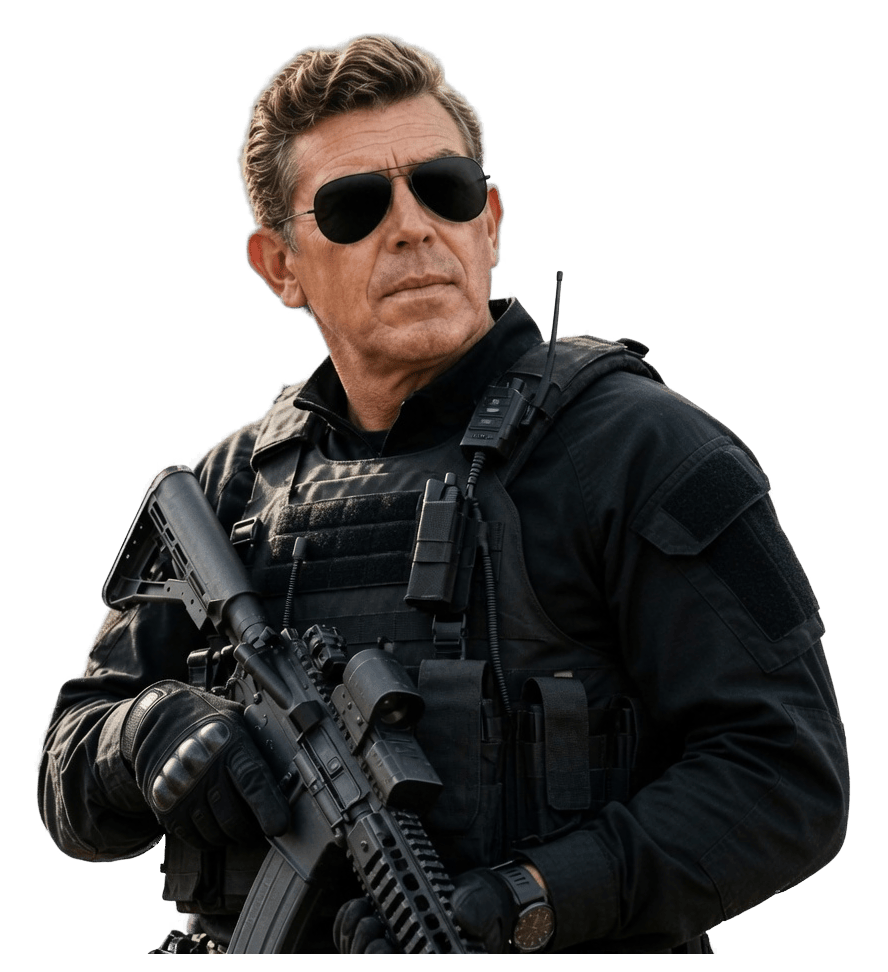
Disclaimer. This is a work of fan fiction. The Andy Griffith Show and its characters are the property of their respective rights holders. No copyright infringement is intended. This work is noncommercial and the author earns no profit from it.
The Lay of the Land
He came back the way he left, alone and after dark, except last time he had a duffel and a bus ticket and seventeen years on him, and this time he had a truck he'd paid cash for in Tennessee and forty-seven years that felt like more.
The sign at the county line still said WELCOME TO MAYBERRY. Somebody had gone at the population figure with black spray paint, not crossing it out so much as burying it, and under the dead number they'd left three letters he recognized and a word he didn't. Taylor slowed the truck and looked at it a while with the engine idling. Then he drove on in.
Main Street used to be the kind of place where a man left his keys in the ignition and came back to find them right where he'd left them, plus maybe a pie on the seat from somebody who'd heard he was poorly. That street was gone. Every other streetlight was dark, shot out or just dead from nobody paying the county's bill. Floyd's barber pole hung off its bracket at an angle, the red faded to the color of old blood. The diner had butcher paper in the windows. The courthouse, the one with the single jail cell where his grandfather had locked up nothing worse than a Saturday drunk who'd let himself in and hung the key back on the nail to be polite, had a sheet of plywood where the doors used to be. Something was sprayed across the plywood that meant the building belonged to somebody now, and that somebody was not the county.
He parked in front of it anyway. Old habit. Parking where a Taylor was supposed to park.
He'd done two tours in the Hindu Kush with the Army and four more years after that with a company that didn't put its name on anything, and the whole time the word home had stayed a fixed point on a map he carried around in his chest. A lake. A whistle. A man teaching a boy to bait a hook. You were allowed to believe a place stayed the way you left it, as long as you never went back to check. He'd finally come back to check.
A voice came out of the dark by the steps. Not a stranger's.
"You ought not to have come back."
The old man sat on the bottom stair the way the old sit when standing has gotten to be expensive. Taylor knew him the way you know your own hands. Thinner than the last photo by a good deal. The red had gone out of his hair years back, what was left of it. Seventy-two and looking past it.
"Pa."
Opie didn't get up. Maybe couldn't, not fast. He looked at his son standing there in the kit with the long bag in his hand, and something crossed his face that the dark mostly kept to itself.
"Your granddaddy kept this town thirty years and never once loaded his sidearm," he said. "His deputy carried one bullet in a shirt pocket and went to his grave without firing it. That was the whole idea of the place. That was the thing worth having." He looked at the bag again. "And here you come with the rest of it."
"I came home, Pa."
"You came armed. That ain't the same as coming home, but I expect you forgot the difference somewhere over there."
Down at the far end, headlights swung onto Main. Two sets, then a third, riding high and moving fast, engines that cost real money in a town that didn't have any to spare. Opie's jaw set. He had watched those trucks take Main Street block by block, and he had run out of words to put in the paper about it sometime back, around the same time the paper stopped.
"Get in the house, Andrew. These aren't the Tuttle boys raising hell on a Saturday night. They run the county now. Sheriff included."
"I know what they are." Taylor set the bag on the tailgate and worked the zipper. "I spent twenty years on the wholesale version of these men. These are just the franchise."
He checked the rifle by feel, hands remembering the work in the dark a long way from here. The whistle came up out of him without being asked for, two low bars of it. The Fishin' Hole. Opie heard it and shut his eyes, because it was Andy's whistle coming out of his son on the worst night the town had seen in a generation.
"Don't," the old man said, quiet. "Whatever this is you're fixing to do. Your granddaddy would've found another way."
Taylor settled the carrier across his chest and stepped down off the courthouse steps, into the middle of what was left of his grandfather's town.
"Granddaddy's been dead twenty years, Pa. Nobody's found another way since."
The trucks came on the way men drive when nobody has told them no in a long time. Down the center of Main, not bothering with a lane, headlights slapping the dark storefronts and dragging the broken barber pole out of the shadow and back into it. Three of them. Big diesels jacked up over tires a working man couldn't buy, the kind of money that doesn't come out of anything you'd want your name on.
Taylor stood in the road and let them come.
He did not get behind the truck. He did not crouch. He stood the way he'd been taught a long way past here, weight even, hands where they belonged, the rifle slung but not raised, a thing he could bring up in under a second and everyone present would feel the second go by. He had learned in a dozen bad places that the man standing still in the road is the question nobody wants to be the one to answer.
The lead truck stopped maybe forty feet out. The other two flared off to either side, boxing the street, which told him something. Whoever ran these boys had taught them a little. Not enough, but a little. They'd learned the shape of a maneuver without learning the reason for it. He filed that. The mind that did the work behind his eyes was already counting doors, counting hands, counting the half-second it would take each one of them to understand that the night had stopped going their way.
Doors opened. Four men, then a fifth, boots loud on the empty street. Young, most of them, that particular leanness of young men who'd found out they could take what they wanted and were still drunk on the discovery. One of them had a pistol already out, held sideways the way the movies taught a generation that never served. Taylor looked at that hand the way a carpenter looks at a board that's going to split.
The fifth man came around the front of the lead truck and into his own headlights, and this one was different. Big through the shoulders and quiet with it, no swagger to spend, a deputy's star pinned crooked on a canvas jacket that had never seen a uniform's discipline. He moved like a man who had hurt people and found out he was good at it and made his peace with that a while back. Cody Shuford, though Taylor didn't have the name yet. He'd have it soon enough. The badge caught the light, and the sight of that star, that exact star, on that chest, did something to Taylor's chest he'd have to deal with later.
"Wrong street to break down on, partner." Shuford's voice was flat, no heat in it, a man reading off a card he'd read a hundred times. "This here's private. You want to get back in your truck."
"It's a county road," Taylor said.
"Used to be."
Behind Taylor, on the courthouse steps, Opie hadn't moved. Old men learn to hold still when the wolves are out. But Taylor heard the breath go out of him, heard it shake, and understood that his father had watched this exact scene play out before with somebody else standing in the road, and that the somebody had not walked away from it intact.
The kid with the sideways pistol drifted wide, trying for an angle, thinking he was being clever. Taylor tracked him without seeming to. The math of it laid itself out clean and terrible. Five men, two firearms visible, the third truck's driver still seated and therefore the actual threat, hands he couldn't see. Forty feet closing to thirty. He could end all of it. He knew the choreography the way he knew the whistle, in the body, below thought, and the knowing was the thing his father had seen in his face and grieved over. He could put every one of these boys in the road in under four seconds, and the town would wake up tomorrow exactly as owned as it was tonight, plus five funerals, and one of them maybe a kid who'd have grown out of it.
So he did the other thing, the harder thing, the thing that took more out of him than shooting would have.
He let them see him decide not to.
"My name's Taylor," he said, and pitched it to carry, pitched it for the dark windows and the men in them and the old man on the steps. "Andy Taylor was my grandfather. He had this street thirty years."
Something moved through the five of them. Not in Shuford, the name slid off Shuford like water off a hot stove, but in the younger ones, a flinch, a glance traded, that old name surfacing out of whatever their mothers and grandmothers had told them. In a town this small the name still lived somewhere under the rot, and Taylor had just struck it like a match to see who flinched at the light. Two of them flinched. He filed that too.
"Don't know him," Shuford said.
"No," Taylor agreed. "I don't expect you would."
He let the rifle stay slung. He let his empty hands hang. And he watched Cody Shuford do the arithmetic that men like Shuford do, the arithmetic of a stranger who hadn't run, hadn't begged, hadn't reached, who'd stood in the road and said an old name like it was a deed, and who was wearing, now that the big man looked, the kind of kit you didn't buy at the county store. The plate carrier. The way the boots were laced. The stillness.
It was the stillness that did it. Loud men know what quiet costs.
"You're a long way from wherever," Shuford said finally.
"I'm exactly where I'm from."
A long moment. The diesel idled. Somewhere off in the dark a dog gave up barking. Shuford was no fool, that was the trouble with him, he was the smart kind of muscle, and the smart kind doesn't spend product it can't price. He didn't know what Taylor was yet. He knew only that he didn't know, and that not-knowing was worth backing off a night to resolve cheap.
"Sheriff'll want to talk to you," Shuford said. It came out half threat, half retreat, and both men heard it land as the second one.
"I'd imagine he will."
Shuford looked at him a beat longer. Then he turned, unhurried, making it his idea, and jerked his head at the others. The kid with the pistol didn't want to put it away. You could see the want in him, the night he'd thought he was going to have curdling into something smaller. He was maybe nineteen, raw and twitchy and full of bad ideas, and he stared at Taylor with the particular hatred of a young man denied a thing he hadn't earned the right to want.
"Go on, Brewer," Shuford said, not loud.
Brewer went. They loaded back into the trucks with more door-slamming than the moment justified, the noise of men who'd lost something they couldn't name and needed to make a sound about it. The diesels swung wide and went back the way they'd come, taillights smearing red across the dead storefronts, and the quiet they left behind was the realest thing on Main Street.
Taylor stood in the road until the sound of them was gone. Then a while longer.
When he turned, his father was watching him from the steps with an expression he hadn't worn yet that night, and would not explain, and didn't have to. It was the look of a man who had just watched his son choose mercy and had recognized in the choosing the exact machinery that made the mercy a choice and not a nature. Andy would not have had to choose. For Andy it would have been the only thing in him. That was the difference, and Opie had seen it, and it broke something in him that the boy had come home able to be merciful the way other men are able to be cruel.
"You didn't shoot them," Opie said.
"No."
"You wanted to."
Taylor came up the steps and stopped beside the old man and looked out at the empty street his grandfather had kept.
"No, Pa. I just knew how."
The house was the same and that was the worst of it.
Same white clapboard up off Maple, same porch where a sheriff had sat of an evening with a guitar across his knee while the whole town walked by and waved. Aunt Bee's kitchen window. The screen door with the spring that had sung the same two notes for sixty years and sang them still when Opie pushed through it ahead of his son, slow, a hand on the frame.
Inside, it had gotten old the way its owner had. The good furniture worn down to the grain. A smell of liniment and old paper and something underneath that Taylor knew from other houses where someone was dying in the back room and pretending in the front one. He set the bag down inside the door, by the wall, where you'd set a thing you were ashamed to have brought.
Opie lowered himself into the chair that was plainly his chair, the one with the lamp and the table stacked with newspapers that had stopped being printed. He did it in stages. Taylor watched the stages and said nothing, because there was nothing to say that his father would thank him for, and because he had learned in hard schools that you let a proud man cross a room under his own power even when it hurts you more to watch than it hurts him to do it.
"You eat?" Opie asked. The question every Taylor kitchen had asked for a hundred years, asked now out of a body that didn't eat much itself anymore.
"I'm all right."
"That ain't what I asked."
"I'm not hungry, Pa."
The old man let it go. He looked at the bag by the door, then away from it, a thing he was making himself not look at.
"Tell me how you knew," Taylor said. "About tonight. You were already on the steps."
"Because it's the only thing left to know." Opie's voice had the dry economy of a man who'd written the county's obituary in installments and run out of room. "Sit down. You're filling the doorway like your granddaddy used to and it's giving me a crick."
Taylor sat.
And his father told it to him, the twenty years, in the flat unsparing way of a newspaperman who had stopped expecting the facts to save anybody and reported them anyway because reporting them was the last thing he had.
The plant had gone first. Furniture, then the thread mill that fed it, the one that had put half the county in shoe leather since before the war. Gone to Mexico, then gone from Mexico to someplace cheaper than Mexico, the jobs chasing the bottom out of the country and taking the town's spine with them. Then the young people, because young people follow work the way water follows down. Then the stores, because stores follow young people. And then the empty came, the particular empty of a place that used to be full, and Opie said the thing he'd clearly said to himself many nights.
"Empty's not nothing, Andrew. That's what folks get wrong. Empty is a thing. It's a kind of hunger. And what's hungry gets et by whatever shows up at the table first." He looked at his son. "What showed up here had product to move and a county nobody was watching anymore. Took it the smart way. Not with guns. With favors. A loan when the bank wouldn't. A job when there weren't any. A blind eye, then a hand out, then a hand in your pocket, and by the time anybody understood the price they'd already been paying it for years."
"And the law."
"The law was the prize." Opie's mouth went hard. "You don't fight a county. You buy its sheriff. Dale Pruitt. You don't know him, he came up after you left, but you'd know his kind. Mayberry boy. Smart, smooth, knows everybody's mama's name. He wears your granddaddy's star, Andrew. The actual star. They kept it in a case in the courthouse and he had it took out and pinned on, and he wears it to church." The old man's hands worked on the chair arms. "And the hell of it, the pure hell of it, is he believes he's holding the place together. Tell him to his face he's the disease and he'll tell you he's the only doctor left in town, and he won't be all the way wrong, and that's what'll keep you up nights."
Taylor sat with that. Outside, a truck passed on Maple and they both went still until it had gone by, two men in a lit room learning the same animal habit.
"Granddaddy," Taylor said. "How'd he go. Really. The letters just said his heart."
"His heart." Opie nodded slowly. "His heart give out at eighty in a clean bed, and that's the truth, and you can thank God he went before he had to watch the rest. He kept the worst of it off the town long as he was upright and folks remembered to be ashamed in front of him. Then he died, and the shame died about a year behind him, and after that there wasn't anybody the bad men had to look in the eye." He paused. "I tried to be that for a while. With the paper. Print a man's name next to what he did, enough times, used to be that meant something. Used to be a man'd move away over it." A short sound that wasn't a laugh. "Town stopped reading. Or stopped being able to afford to care, which comes to the same. Paper folded four years back. I kept the office. Don't know why. Habit, I guess. Same as you parking at the courthouse."
"And the part you're not telling me," Taylor said. "The reason you wrote me now and not the other twenty times you could've."
The old man was quiet a long moment. Then he told that too, because there was no version where he didn't, with his son already in the chair and the bag already by the door.
"Doctor up in Mount Pilot give me a number of months a while back, and the number's smaller now than it was." He said it the way he'd have set a headline, plain, the size of it carried by the plainness. "I didn't write you to come fix Mayberry, Andrew. Get that straight tonight and save us both the grief later. Mayberry's gone. I wrote you because I'm dying and a man wants his boy to know it from him and not from a stranger's phone call. That's all I wanted. My boy back, a little while, before."
The word sat in the room. Before.
"I came for you," Taylor said. "Not the town. You."
"I know it." Opie looked at him, and the look had everything in it, the love and the fear and the old grief about the kind of man the boy had gone and become. "But I saw your face on those steps tonight when you looked at that star on the wrong chest. And I know you. You came for me. But you'll stay for the rest of it. And I am asking you, with the time I got left to ask anything, to be my son in this house and not be that thing out there in the road." He nodded at the bag by the door without looking at it. "Leave it in the bag, Andrew. Please. Your granddaddy kept a whole town in his hand without ever closing his fist. I'd give the months I got left to see you find that out before it's too late in you to learn."
Taylor looked at the bag. He looked at his father, smaller in the chair than the man who had taught him to fish, dying by a doctor's count, asking for the one thing his son did not know how to give.
"I'll try, Pa," he said, which was not a yes, and both of them knew it, and the old man closed his eyes and accepted the lie as the kindest thing on offer.
By daylight Mayberry was worse, and quieter, and that was its own kind of testimony.
Taylor walked it in the morning with no kit, just a man in a canvas coat with his hands in his pockets, which fooled exactly nobody but was a courtesy he paid the town anyhow. He walked it the way you walk a place that's died, slow, reading the stones.
The school first. Brick, two stories, the kind they built when a community believed in its children enough to make a thing of brick. Boarded now. The marquee out front where they'd posted the honor roll and the ball scores still had letters in it, a few, enough to read the bottom of some old announcement that had nothing on the other side of it now. Grass in the cracks of the lot. A backboard with no rim.
The filling station, where two generations of men had pumped gas and told the same three jokes for forty years, all of them gone so long now they were barely even ghosts. Pumps still standing, gutted. The bay doors rusted in their tracks.
Bethel Baptist held on, just barely. White frame, a steeple that needed paint, the sign out front with a sermon title in those slide-in letters, and somebody had kept this one current, this week's word put up fresh, which meant somebody still climbed up there on a Saturday and believed it mattered. The door stood cracked, and inside a man in shirtsleeves moved slow between the empty pews with a dust cloth, tending a room nobody came to anymore. Taylor put his head in.
The man looked up without surprise, the way a man does who has stopped expecting anybody and has made his peace with it.
"Wendell Abernethy," he said. "I christened you. You won't remember. You were three weeks old and you hollered the whole time." He folded the cloth over the back of a pew. "Your grandpa stood right there and held you. Third pew, on the left. Miss Helen beside him."
"Reverend."
"I know what you are. I can read it on a man." Abernethy came down the aisle, no hurry in him. "So I'll save us both the dance. I've buried six this year already. Five of them younger than you, and everybody in this county knows what put them in the ground. I won't pick up a gun. I won't add to the pile, not even on the right side. That's the one thing I've still got the say over."
Taylor said nothing.
"But you come by here hungry, I'll feed you. And when this is done, however it falls, you bring me whoever needs burying. Theirs or ours, I don't ask. The burying they have not took from me yet." He looked at Taylor a long moment. "It's the last thing in this town that's still mine to give."
He went back to his dusting. Taylor let himself out and did not let the door bang.
And the people. That was the thing the ruin tour didn't prepare a man for. There were still people.
An old woman on a porch stopped her rocker when he passed and stared, and her hand came up to her mouth, and she said a name. Not his. His grandfather's. "Andy?" Quiet, like a question to God. He stopped at her gate.
"His grandson, ma'am."
"Lord." She gripped the arms of the rocker. "Lord, you favor him. You favor him something terrible." Her eyes were wet and she didn't seem to know it. "He locked my Harlan up one Saturday for being a fool with a tractor and let him sleep it off and never wrote it down anyplace and never told a soul, and Harlan voted dry for thirty years out of pure shame and gratitude both." She laughed, and it turned into something else. "There's nobody now. You understand me, son? There is nobody now."
"I understand, ma'am."
"No," she said, looking at his hands, the way his father had looked at them. "I don't believe you do. But you favor him."
The name worked on the old ones like that, all morning, a current in the dead street. They knew the name Taylor and the name carried thirty years of a man keeping the peace without ever closing his fist, and they spent it on his grandson with their eyes. The young ones didn't look at him at all, or looked the way Shuford had, a stranger to be priced. To them the name was nothing yet. That was the whole arithmetic of the town in two glances, the old who remembered and could do nothing, the young who could do anything and remembered nothing, and the dead street running between them.
He came around onto Main and there was the courthouse in the daylight, plywood and tag and all, and parked in front of it, a county cruiser, clean and new and idling, with a man leaned against the fender waiting for him with the patience of someone who'd been told he had all the time in the world.
The man pushed off the fender and smiled, and the smile was the worst thing Taylor had seen all morning, because it was friendly, and it was real, and on the chest above it, pinned to a pressed county uniform, was his grandfather's star.
"Mr. Taylor," Dale Pruitt said, like a man greeting an old friend at a funeral. He put his hand out. "Sheriff Dale Pruitt. I surely am sorry it took us till morning to welcome you home proper. I hear there was some confusion last night. I apologize for my people. They get a little protective of the peace."
Taylor looked at the offered hand. He looked at the star above it. He took the hand, because you learn what a man is by how he shakes, and Pruitt's shake was warm and firm and exactly as long as it should be, the handshake of a man who'd practiced being decent until it came up smooth as the real thing.
"Sheriff," Taylor said.
"Your granddaddy stood right about where you're standing for thirty years." Pruitt looked up at the boarded building with something that played as fondness and might even have been. "Greatest lawman this county ever had. I mean that. I had his picture in my office before I had this job, you want to know the truth. Folks don't make them like that anymore." He let go of Taylor's hand and the smile stayed. "Times changed on us, though. That's the part the old folks can't hardly bear. Your granddaddy kept a town where the worst thing that happened on a given night was somebody's nephew got into the cooking sherry. I don't have that town. Nobody gave me that town. I got the one that's left." He spread his hands, taking in the plywood, the dead pole, the papered windows. "And I keep what can be kept. It is not pretty and it is not how he'd have done it, and I expect I'll answer for some of it. But the alternative is what's behind all this empty, and you have not met those men, son, and you do not want this county to either. So I do business with the weather to keep the worst of it off these people's roofs. That's the job now. It's an ugly job and I'm the only one in forty miles fool enough to do it."
It was a good speech. Taylor recognized it as a speech, recognized that Pruitt had given versions of it before and believed every version, and recognized, under the believing, the steel. The man wasn't lying. That was the danger of him. He'd built a true thing and a rotten thing into the same sentence so you couldn't pull one out without the other coming with it.
"You knew my grandfather's name carried weight," Taylor said. "Before. When you were a boy."
Something flickered, fast, and was smoothed over. "Whole town did."
"And now you're the one it doesn't buy anything from."
The smile held but the eyes behind it cooled a few degrees, and there it was, the thing under the civics, the boy who'd grown up in a town where one family's name opened doors his never would, who'd watched a dead man cast a shadow he could never get out from under no matter what star he pinned on.
"Now you," Pruitt said pleasantly, "are a man whose daddy is poorly and who's come a long way to sit with him, and that's a Christian thing, and I respect it. Sit with your daddy, Mr. Taylor. Grieve him when it's time, decent and quiet. And then go on back to wherever a man like you keeps his things." The friendliness never left his voice, which was how you knew it had teeth. "Mayberry's a hard place to be a stranger in. And son, no offense in the world, you been a stranger here twenty years. Don't let the name fool you into thinking otherwise. It fools the old ones. It won't fool me, and it surely won't fool the weather."
He got into the cruiser, unhurried, and put the window down.
"Tell your daddy Dale Pruitt asked after him," he said, and meant it, and that was the most chilling thing of all. "He's a fine old man. I read his paper when there was one. Pity about all that."
The cruiser pulled away soft on the dead street, and Taylor stood in front of his grandfather's boarded courthouse a long time, and understood that the worst enemy is not the one who hates you. It's the one who's half right, and sleeps fine, and asks after your father by name.
There was an old man parked in the shade across from the courthouse, in a steel wheelchair gone the gray of weathered fence wire. He had a clear sightline to the plywood doors and to everything that came and went from the office that used to be the law, and he watched it the way a man watches weather he has already lived through. He was watching when Taylor came up the walk, and he kept watching, and then he turned his head.
"You'd be the boy," he said. "The grandson. You've got the jaw."
Taylor stopped. The man's hands lay in his lap, both of them, and they were wrong. The fingers had set crooked, knuckles risen like knots in a board, the whole of each hand curled toward the palm and stopped halfway, healed into a shape that would never again close on anything or open all the way either.
"Vestal Hensley," the old man said. He did not offer a hand. There was no hand to offer. "I wore a deputy's star in this county. I came on at the tail end of his time, before he went to the state. You won't have heard of me. There's no reason you would."
"No, sir." Taylor reached up, out of something older than thought, to take off a hat he was not wearing. His fingers found his own hair. He let the hand come down.
The old man saw it. Something moved behind his eyes and did not become a smile.
"I'll tell you what I see," Hensley said, "since nobody else will, and I'm too old to be afraid of you. I knew your granddaddy. He held his hands like he'd already decided he was never going to use them. Whole town between his and the dark, and he kept them open." He looked at Taylor's hands, hanging easy and ready at his sides. "You hold yours like a man waiting on permission. I can't tell yet who gives it to you. I'd surely like to know before I die."
A truck went by behind them. Neither of them looked at it.
"They did that to your hands," Taylor said. It was not a question.
"They did. In my own carport, on a Tuesday." Hensley turned his face back toward the boarded courthouse, toward the star somebody else was wearing now. "But the oath's in the mouth, son. They never could reach that."
The thing that turned it, when it turned, was small. They always are. Taylor had learned that in places with worse names than Mayberry, that the avalanche is one stone deciding to move and a slope that was already waiting.
He met the boy three days in, behind the folded Gazette office, where his father still kept a key and went some mornings to sit among the dead presses like a man visiting a grave.
The kid was going through the trash cans in the alley, and not for food, which Taylor clocked in the first half-second, the practiced way of it, a boy who'd done this before and knew which cans were worth the trouble. Fourteen, maybe, all elbows and attitude, that age where the body's outrunning the sense. He had a cheap phone he kept checking and a watchfulness that didn't belong on somebody that young, an eye on both ends of the alley at once. When he saw Taylor he went still the way a deer does, weighing run against bluff.
He chose bluff. They always do, the brave ones, the ones worth saving.
"This ain't your alley," the kid said.
"Wasn't aware it was anybody's."
"Everything's somebody's." He said it like a thing he'd been taught, which he had, and the words landed in Taylor's chest because he'd heard a grown man say nearly the same thing in the road three nights back. Used to be. Now it's private. The boy was learning the catechism of the new town the way Taylor had once learned to bait a hook.
"What's your name?"
"What's yours?"
"Taylor."
The kid's eyes changed, just slightly, the name surfacing in him too, but buried deeper, half a generation further from the source. "Like the sheriff. The old one. The dead one." He said dead the way kids say it, testing whether it would get a rise.
"Like him."
"My granny talks about him." Said grudgingly, like it cost something. "Says he'd have. I don't know. Fixed stuff." A shrug that was meant to throw the whole idea away and didn't quite manage it. "She's old. She thinks it used to be like the TV." He went back to the can, performing not caring. "It was never like the TV."
"What's your name," Taylor said again, and this time it wasn't a question.
The kid weighed it. "Colt."
And from the mouth of the alley, a woman's voice, sharp with the particular fear that comes out sounding like anger because anger's the only safe shape for it. "Colt. Colt. Get away from him."
She came down the alley fast, thirty-some and tired in the way that has nothing to do with sleep, a grocery sack in one arm and the other already reaching for the boy. Kayla Draughn, though Taylor wouldn't have it for a minute yet. She put herself between the kid and the stranger without breaking stride, a thing so practiced it was barely a decision, her body a wall she'd clearly made of herself many times before.
"Whatever he's selling, we don't want it," she said to Taylor, flat. "Whatever you want him to run, he's not running it. Find another kid."
"I'm not selling anything."
"They all say that." She looked at him hard, took in the coat, the stillness, the something-off about him, and her jaw set. "You're the one from the other night. The one parked at the courthouse. Folks are talking." Not admiring. Afraid. "Andy Taylor's grandson come home to play. That's just real fine. That's just exactly what this place needed, one more man who knows how to make trouble." She got a grip on Colt's arm. "Let me tell you how it goes here, since you been gone. Men make trouble, and then the men who run it make trouble back, and it don't land on the men. It lands on us. On him." She didn't have to point at the boy. "So you go on and be a Taylor someplace that can afford you. We can't."
"He was in the cans," Taylor said. "Not for food."
That landed. He watched it land, watched the fear in her flash over into something rawer because he'd named the exact thing that kept her up at night, the boy drifting toward the trucks, the boy with a cheap phone and a watchful eye, the boy being courted the slow patient way they'd courted the whole county, with attention and a little money and the feeling of mattering.
"Colt." Her voice cracked once and she nailed it back down. "What were you doing in the cans."
"Nothing." The sullen wall. "Looking for cans. The metal kind. You can sell them."
"Don't you lie to me."
"I'm not." And then the boy's voice broke up into the registers it broke into at that age, the bravado falling off it all at once, and underneath it was just a kid, scared, who wanted things and didn't have a clean way to get any of them. "There's a guy. He just. He texts. He says there's easy money and I don't even have to do nothing yet, just be around."
"Just be around." Kayla's eyes shut. "Lord. Lord God." When she opened them they were dry and terrible. "That's how it starts. You think that's not how it starts? That's how your mama started. Being around." And to Taylor, because she had to put it somewhere and he was standing there: "Their mama OD'd on their product two years back. Their daddy run off before that. I've got him, and I've got a sister his age in the ground, and I've got a grandmother can't get out of the bed, and I have got exactly enough rope to hold all of it if nobody pulls on it. And here you come."
Taylor looked at the boy. Fourteen. All the wrong appetites pointed all the wrong directions by men who knew exactly what they were doing. A cheap phone full of a stranger's friendly attention. He looked at Colt and he saw, with a clarity that hurt, a different boy, by a different water, with a fishing pole instead of a phone and a grandfather instead of a dealer holding out a hand and calling it a favor. The same boy, really. The same hunger that empty makes. Just a different table got to him first.
"The man who texts you," Taylor said to the boy, even and quiet. "You're going to show me those messages."
"You ain't my daddy," Colt started, hot.
"I don't have to be." Taylor crouched, putting himself below the kid's eye line, a thing he'd learned worked on the young and the cornered, and his voice didn't rise and that was what made the boy go still. "You can do whatever you want. You're old enough that nobody's going to stop you, not even her, and she'd die trying, and you know that, and you're letting her anyway. That's the part you don't see yet. You think you're the one taking the risk. You're not. She is. She always is." He let it sit. "Show me the messages. Then do whatever you want."
The alley was quiet. The boy looked at his sister, and the sister looked at the stranger crouched in the dead town's trash, and Taylor saw her understand something she didn't want to, which was that this man, this dangerous unwanted man she'd told to go be a Taylor someplace else, was the first person in two years who had looked at the trap her brother was walking into and not flinched from the size of it.
"I told you we don't want it," Kayla said, but the steel had gone out of it.
"I know," Taylor said. He stood up. "I heard you. You don't want trouble, and you're right not to, and I'm it, and there's nothing I can say to that." He looked at the boy, at the phone in his hand with the friendly poison in it. "But that's already on his phone. That came looking for him. I didn't bring that. That was here before I got back, and it'll be here after I'm gone, and somebody's been letting it in the door because the only man this town had who'd have stood in the door is twenty years dead."
He turned to go, and stopped, and said the last of it to the wall of the dead newspaper office, to his father's folded paper, as much as to either of them.
"I came home to sit with my dying father. That's all. I told him I'd leave the rest in the bag." He looked at the boy one more time, fourteen and all wrong appetites and not one bad bone in him yet, not yet. "I'm starting to think that's not a thing he should've asked me, and not a thing I should've said yes to."
He walked out of the alley into the dead noon street, and behind him he heard the boy say, low, to his sister, "Kayla, that's the Taylor guy," and heard the sister not answer, and knew that the stone had moved, the small one, the one the whole slope had been waiting on.
That night Pruitt's people came for the kid.
Not hard. That was the thing about how they did it, the awful patience of it, they never came hard first. A truck on the road by Kayla Draughn's place after dark, idling, lights off. A man Taylor would later have a name for, Shuford, walking up the gravel slow with his hands easy and that crooked star catching the porch light, to say a few quiet neighborly words about how a boy with prospects oughtn't to be talking to strangers, especially strangers been seen with that Taylor fellow, on account of strangers had a way of bringing weather down on a family, and didn't Miss Draughn have enough weather already, with her granny poorly and all.
Taylor was on the porch when the truck came. He'd been there since dark. He'd told himself he was just making sure, just gathering information, just taking the measure of it, the way he'd told his father he'd try, the way he'd told himself a hundred lies in a hundred worse places to keep the bag zipped one more night.
He let Shuford get all the way up the gravel and say his quiet piece to the closed door, the boy and his sister and the bedridden grandmother all three inside it. He let the man finish. He believed in letting a man finish. Then he came off the dark end of the porch where he'd been the whole time, no kit, no rifle, just his hands, and he stood between Cody Shuford and the door his grandfather would have stood in.
"Evening," Taylor said.
Shuford turned, and to his credit didn't startle, just took Taylor in, the placement of him, the calm, and recalculated the way he'd recalculated in the road. "This ain't your house, Taylor."
"No," Taylor agreed. "It's hers. You're on her gravel telling her how the weather works. I thought I'd come hear about the weather."
"You don't want in this."
"I'm in it. You put me in it three nights ago when you boxed a county road and called it private." Taylor's voice stayed low and even and that was what did the work, the absence of any heat in it at all. "Here's the only thing I came over to say. You can run this town's children at this town's old women all you want, that's your job, I understand the job. But you're going to do it at this house never again. Not this house. You found the one porch in Mayberry that's got somebody standing on it."
"There's five of us," Shuford said, "and there's one of you."
"There's one of me," Taylor agreed, "and you've spent three days trying to find out what kind of one, and you still don't know, and that's why you came alone tonight to lean on a woman and a sick boy instead of bringing the trucks. Because the trucks would've made it a thing, and you don't want it to be a thing until you know what I am." He took one step, just one, and Cody Shuford, who was bigger than him and younger than him and had hurt a great many people, took half a step back before he caught himself, and both men saw it, and that half step was the whole conversation. "Go on home, Shuford. Tell Pruitt the Taylor fellow says the boy's spoken for."
For a long moment the big man stood there in the porch light with the dead-eyed arithmetic running behind his face. Then he smiled, slow, no warmth in it, and reached up and tapped the star on his chest with one finger, deliberate, making Taylor look at it.
"You see this," Shuford said. "This is the law in this county. You just put your hands toward the law." He let it hang. "Now you look like the law."
He held Taylor's eye long enough to be sure it had landed, that he'd made a threat out of a deputy's star on Andy Taylor's own grandson's borrowed porch, and that there was nothing the grandson could do about the badge but look at it. Then he turned and walked back down the gravel, unhurried, owning the walk, and got in the truck, and the truck sat there idling in the dark a while to make its point before it pulled away.
The door opened behind Taylor. Kayla stood in it with the boy at her shoulder, and the look on her face wasn't gratitude, it was closer to grief, the look of a woman watching the last calm leave her life.
"You just made it worse," she said quietly. "You know that. You just made us a thing he has to win now."
"I know," Taylor said. He was looking out at the road where the taillights had gone.
"Then why."
He didn't answer right away. Out past the gravel the dark went on toward the hills his grandfather's town had been built under, and somewhere back of those hills was the weather Pruitt did business with, and somewhere further back than that was a thing Taylor had spent twenty years being, that he'd come home to set down in a bag by a door, and that was standing back up in him now, slow, the way an old habit stands up.
He thought about a boy with a fishing pole. He thought about his father in the chair, dying by a doctor's count, who had asked him to leave it in the bag, and whom he was about to disappoint in the one way the old man had begged him not to.
"Because somebody let it in the door," Taylor said. "And the man who'd have stood in the door's been gone twenty years." He turned and looked at her, at the boy behind her, at the lit house with the sick old woman in it that held the whole memory of what the town used to be. "And I'm tired of every house in this county finding out at the same time that there's nobody standing in it."
He went down off the porch into the dark and the cold, and he walked back toward his father's house, toward the bag by the door, and he did not whistle, because he understood now that he was past the part where whistling helped.
Back at the house the lamp was still on. His father was asleep in the chair with a folded paper across his chest that had no news in it, breathing the shallow careful breath of the dying, and Taylor stood over him a long while in the lamplight, this old man who'd kept a paper after the town stopped reading it the way his own father had kept a town after the country stopped deserving it, each Taylor keeping a smaller thing than the last, and now it had come down to him, and the only thing left small enough for him to keep was in a bag by the door.
He crouched by the bag. He didn't open it. Not yet. He just put his hand flat on it in the dark, the way you'd put a hand on a sleeping animal to feel it breathe, and he stayed like that while his father slept and the town held still around them both.
Somewhere out past the hills the weather waited. Somewhere closer a sheriff slept fine in a clean bed wearing a dead man's star, half right and resting easy on it. And here, in a lamplit room that smelled of liniment and old paper, the last Taylor knelt with his hand on the bag he'd promised to leave closed, and let the promise go, quiet, the way you let go of a thing you always knew you couldn't carry all the way.
Outside, the road ran on toward the dark hills and did not say where it went.
The Cleanup
He opened the bag before light.
Not in the house. He carried it out to the truck while his father slept and worked in the cab with the dome light off and the hills going gray over Maple, because some things a man owes it to the people he loves not to do under their roof. He laid the pieces out on a towel across the bench seat the way he'd laid them out in worse places, and his hands did the work without his watching, checking, seating, setting aside. He was not arming for a fight. He was taking inventory of a trade he'd told a dying man he'd left behind, the way you'd go down to the barn and run your hands over tools you swore you were done with and find them oiled.
He did not start with the trucks. The trucks were the loud part, and the loud part was last. A man who'd spent twenty years on the wholesale end knew that you never went at the loud part first, because the loud part was designed to be gone at. You went at the boring part. The boring part was where they lived.
So for two days Taylor was the most boring man in the county. He sat in the truck. He drank gas-station coffee gone cold. He drove the county roads at the speed limit and watched what moved on them and where it stopped, and he learned the shape of the thing the way you learn a river by watching what floats. He did not touch a soul.
He learned that the product did not come in on the big diesels, which were for show and for collection and for leaning on porches. It came in plain. A propane company truck that delivered to houses that cooked on electric. A man named Ledford who hauled scrap and whose scrap route ran past three trailers in a pattern that had nothing to do with scrap. A woman who ran a tanning bed in a strip of dead storefronts that took more cash in a Tuesday than tanning beds took in a town where nobody could afford to lie down under a light to get browner than the work already made them. He learned where the money slept before it went up the line, which was the back office of a parts store that hadn't sold a fan belt in a year and kept its lights on anyway.
He learned the muscle. Five regular, Shuford's crew, plus Brewer the twitchy one and a heavier man named Dwayne Hollar who did the driving. He learned which of them drank and where, which one had a girlfriend he stayed with on the nights he was supposed to be watching the parts store, which one prayed, which surprised him, a young one slipping into the back of a Pentecostal house on a Wednesday and coming out wet-eyed and going straight back to it. He filed them all the way he'd been trained, not as men but as load-bearing members, which ones you pulled to bring the structure down and which ones would only get replaced by morning.
The boring part is also the part where you find out who can be saved.
He started with the propane truck.
He took it on a Thursday on the long grade out past the closed plant, where the road climbed lonesome between two stands of pine and a man could be made to stop without a soul to see it. He'd watched the truck run that grade four mornings running. He knew the driver, an older man named Overcash who'd hauled propane back when propane was all it hauled and who'd taken the other freight the way the whole county took everything, a little at a time until it was all the way in. Taylor did not hurt him. He stood the truck down at the top of the grade with nothing but his body and the truck across the road, and he opened the door, and he showed Overcash the thing in his face that Overcash had spent a career not letting himself see in the men he hauled for, and he told him, quiet, that the propane route was done.
"They'll kill me," Overcash said. He had his hands up off the wheel without being told. His voice shook. "You don't know these people."
"I know exactly these people," Taylor said. "I'm going to do you the only kindness anybody in this is going to get. You're going to have a breakdown this morning. Real one. I'll see to the truck. You're going to ride it to the shop in Mount Pilot and you're going to be laid up there a week with parts on order, and while you're laid up you're going to remember your sister in Tennessee, and you're going to go see her, today, this afternoon, and not come back till this is over." He let that sit. "Or you can run the route. And I'll be on this grade tomorrow, and the day after, and there's only the one road."
It was a kind of mercy, what he did to Overcash, and it cost the old hauler his nerve and his pride and a week's pay, and it was the cleanest thing Taylor would do for a while, and even it was not clean. He stood on the grade after the truck was hauled off and felt the old machinery seat itself in him, the cold competence with the heat all the way out of it, and he knew the feeling for what it was, which was home in the only country he'd been fully a citizen of for twenty years, and he hated that it felt like coming back.
The scrap man he turned. Ledford had a daughter in the operation's debt, the slow way, a doctor bill and a loan and a vig, and Taylor found that out by being boring, and he sat in Ledford's kitchen and laid out for the man exactly how the debt would never end and exactly what his daughter was being walked toward, the long patient walk, the one they'd walked the whole county. He did not threaten Ledford. He didn't have to. He just told him the truth about the arithmetic, which no one had done him the cruelty of doing before, and watched the man's face come apart over his own table. Ledford's route stopped carrying. Ledford started carrying something else, which was everything he saw, to Taylor, in a back booth of a diner two towns over, because a frightened man who has finally been told the truth will give you a great deal if you are the only one who told it to him.
The tanning bed he burned. Empty, at three in the morning, careful, the kind of fire that reads as bad wiring in a building full of bad wiring, no one in it, the cash already gone up the line that week so he wasn't even taking their money, only their place to wash it. He stood across the dead street and watched it go and felt nothing he could call satisfaction, only the grim accounting of a node removed, and he thought about the woman who'd run it, who he'd watched for two days, who had a kid she dropped at a sitter every morning, and he made himself think about her because the day he stopped making himself think about her was the day his father had been afraid of his whole life.
By the end of the first week the operation in Mayberry was running rough. Not broken. Rough. A propane route gone, a scrap man gone quiet, a wash node burned, the money in the parts store backing up because the channels out had narrowed, and a low hum of something the men on the trucks could feel but not name, the way you feel weather before it's weather. Taylor had not fired a shot. He had not been seen by anyone who'd talk. He had taken a town's worth of small bad arrangements apart with the patience of a man defusing something, and the frightening part, the part his father would have grieved over worst, was how good he was at it, how the days of it settled him, how he slept better that week than he had since he'd come home.
He knew that was the danger. He'd seen it eat better men than him in worse places. The work feels like virtue when you're good at it. That's the whole trap, and he'd watched a hundred men walk into it whistling, and he walked into it now with his eyes open, which he told himself was different, the way every man tells himself it's different.
His father was failing faster. He saw it and made himself see it. Some mornings Opie didn't get out of the chair at all. The Mount Pilot doctor had said spring, and it was not going to be spring.
That part Taylor could not take apart with tradecraft, and it was the only part that mattered, and he gave it the leftover hours, sitting with the old man in the evenings, not telling him where the days went, and his father not asking, the two of them holding a silence between them like a thing on a table that neither would name.
Hope is a contagious thing and it does not care who it infects.
That was the part Taylor had forgotten, or had never had to learn, because in the work he'd done the people around him were assets or obstacles and never neighbors. He'd taken nodes apart in a dozen countries and watched the structure shiver and never once had to watch a town take heart from it. Mayberry took heart. He hadn't asked it to. He couldn't have stopped it.
It started small, the way the rot had started small, which should have warned him and didn't. A man who ran a feed store on the edge of town stopped paying the envelope. Just stopped. Told Shuford's collector to his face that he'd heard the wind had changed and he reckoned he'd keep his own money this month. A woman at the diner that had reopened as a cash-only nothing under new ownership let it get back to the new owners that some folks were saying the Taylor boy was setting the county right, and that maybe a body didn't have to be so careful what she said anymore.
And Vestal Hensley wheeled himself down to the parts store in broad day and sat across the street from the back office in his steel chair with his crooked hands in his lap and watched it the way he watched the courthouse, openly, all afternoon, making himself a witness again the way they'd broken his hands to stop him being. Word of that went around the county faster than anything had in years. The old deputy was sitting watch again. The old deputy had taken his chair downtown and dared them.
Taylor heard about all of it and felt the thing he should have felt, which was dread.
Because he knew what came next. He'd seen it on the wholesale end, from the inside, how an operation answered the first sign that a population had stopped being afraid. You did not punish the brave. The brave were the point of it, the brave were what you were trying to break, but you didn't reach them by hurting them, because hurting the brave only made more brave. You reached them by hurting somebody soft near them, somebody who'd done nothing, so that the brave one had to carry it, had to lie awake knowing that his standing up had put a body in a bed that wasn't his. That was the lesson, and the operation in Mayberry had learned it from the same cold school Taylor had, and they taught it now.
They taught it on the preacher.
Not Abernethy himself. They were smarter than that, or crueler, which in this came to the same. They went at the church. Bethel Baptist, the white frame with the steeple that needed paint and the sermon sign Abernethy kept current with his own hands every Saturday. There had been a quiet collection going, Taylor would learn, a thing the seven faithful had started without telling anybody, a little money put by in a coffee can in the church office to help the Draughns and two other families keep the power on through the winter, because Abernethy had stood up one Sunday in front of his seven and said that a church that buried the county's children could at least keep the survivors warm, and the seven had taken him at his word. It was the bravest thing that little church had done in a decade. Somebody talked. In a town that size somebody always talks.
They came in the night and took the can and they did not stop at the can. They went through the church the way they'd been going through the county for years, the slow patient way turned fast and loud for once because the point this time was the noise. They tore the office apart. They pulled the pews crooked. They took a maul to the old upright piano that had been in that room since before Andy Taylor sat third pew on the left, and they left it broken-backed and groaning, every string sprung, a sound it would never make again. And on the sermon sign out front, where Abernethy put up the week's word in slide-in letters every Saturday with his own hands, they spelled out the mark. The three letters and the fourth shape. The thing on the county-line sign and the courthouse plywood. The operation's sign of possession, put up on the front of the one building in the county that had still belonged to God.
Old Wendell Abernethy found it at first light, going up to change the sign the way he did every Saturday of his life, and he stood in front of his own church and looked at what owned it now spelled out in his own letters, and his heart, which had buried six that year and five of them younger than the soldier come home, did the thing tired hearts do.
He did not die of it. That mercy at least. But he went down on the church steps with his hand to his chest, and there was no one to come, because there was no one at that church anymore, that was the whole point, and he lay on the cold steps a long time before a woman driving past to her shift saw him and stopped. They took him up to Mount Pilot in an ambulance that came slow because everything came slow now, and he lived, and he would not preach again that anyone could promise, and the seven faithful learned what their bravery had cost and learned it written in a stroke on an old man's face.
Taylor came to the hospital. He stood at the foot of the bed and the preacher looked at him out of the side of his face that still worked, and could not say much, but said enough.
"I told you," Abernethy got out, slow, the words coming crooked now like Hensley's hands. "I told you. I won't add to the pile." A long breath. "But you started something, son, and now I'm on it. Now we're all on it." There was no accusation in it and that was worse than accusation. "I don't blame you. I want you to hear me say it. A man who lets a thing be done so as nothing worse gets done, that man's already in it, he just gets to pretend he ain't." The good side of his mouth moved. "You took my pretending. I don't thank you for it. But I don't blame you."
Taylor stood at the foot of the bed and took it. It was the right thing to take and he took it, and it did not make it lighter, the knowing he was right that somebody let it in the door. Being right had put an old man on the church steps. He'd known the shape of it before he ever opened the bag, had known that hope gets the soft ones hurt, and he'd opened the bag anyway, and now he stood in the hospital and called that a cost and made himself look at it instead of past it, because looking past it was the road his father had begged him off of.
Kayla Draughn was in the waiting room when he came out. She'd brought Abernethy a thing in a dish because that was what you did, the old courtesy that outlived everything, and she looked up at Taylor and there was no I-told-you-so in her either, which somehow he could have stood better than what was there instead, which was that she'd come around. He could see it. The thing she'd been afraid of had happened, the trouble had landed on somebody soft, exactly like she'd said it would on her own porch, and instead of running it had set her jaw.
"My granny knew him sixty years," she said. "Abernethy. He married her and Grandpa." She turned the empty look on the hospital hall. "I keep waiting to be sorry I ever talked to you in that alley." She wasn't crying. He'd never seen her cry and never would. "I can't get there. I keep trying and I can't get there. What does that make me."
"It makes you tired," Taylor said. "And it makes you somebody who's done being careful." He paused. "And that's the dangerous part, Miss Draughn. I want you to hear me say it the way he just said his to me. Brave is what gets the people next to you hurt. Not you. Them. I'd send you home and tell you to keep your head down if I thought for one minute you'd do it."
"You wouldn't have come back if you thought anybody'd do it," she said, and that was true, and he didn't argue it.
He took the boy fishing because the boy asked, and because a man has to do one thing in a week that isn't the work or the work eats the rest of him, and because some part of Taylor that he did not examine too closely needed to put a pole in that boy's hands before the county finished what it had started on him.
The old fishing hole was gone. He'd known it would be. He drove out to it anyway, the first morning, alone, to see, because a man has to see a thing himself before he'll believe it's dead. The lake his grandfather had taught him on, the one that had been the fixed point on the map he carried in his chest through two wars and four years of worse, was a sump now. The county had let a culvert back up and somebody had been dumping in the low end of it for years, and there in the brown shallows, half sunk, rusted to the color of the old barber pole, was a box spring, the coils of it breaking the surface like something drowned that hadn't finished going under. Taylor stood on the bank where a man had taught a boy to bait a hook and looked at the box spring in the water and did not whistle, though the two bars of it came up in him unasked the way they had in the road his first night home, came all the way up to the back of his teeth, and he shut his mouth on them and let them go back down unsounded. Some things you do not get to have. He'd learned that a long way from here. He turned the truck around.
So he took Colt to the river instead, a bend of the Ararat down below the broken low-water bridge where the current dug a pool against the far bank, the kind of spot the old men used to know and the young ones had forgotten because nobody was left to walk them out to it. He'd had to ask Vestal Hensley where the fish still were. Hensley had told him, dry, that the fish had outlasted the town because the fish never read the paper, and had drawn him a map on the back of a feed-store flyer with a pen wedged into a hand that couldn't hold it right, the letters coming out big and labored and clear.
It was a cold bright morning, more winter than spring still, the river loud and the willows bare. Taylor rigged two cane poles he'd bought off a man in Mount Pilot because he would not buy gear in Mayberry where it would be marked and counted. He showed the boy how to thread a worm so it stayed, how to read the seam where the fast water met the slow and drop the bait at the top of it and let it ride down natural. Colt was sullen about it for the first half hour, performing the not-caring he performed about everything, holding the pole like it might go off.
Then a fish hit, a fair smallmouth, and the boy forgot to perform.
He came up off the bank hollering, fighting it all wrong, and Taylor put his hands over the boy's hands on the pole the way his grandfather had once put his hands over his, and walked him through it, let him do it, mostly, just keeping the rod tip up when the boy would have horsed it, and they brought the fish in onto the gravel and the boy stood over it breathing hard and grinning so wide it took ten years off him, took the phone and the trucks and the dead mother and the sister in the ground off him, made him for one minute exactly what he should have been all along, a boy by a river with a fish.
"That's mine," Colt said. "I caught that."
"You caught that."
"Can we keep it?"
"It's yours. You decide."
The boy looked at the fish a while, the bronze side of it heaving in the cold light, and Taylor watched him decide, and watched him surprise himself.
"Naw," Colt said, and crouched, and worked the hook out the way Taylor had shown him, careful, his tongue in the corner of his mouth. "He's just little. Let him grow up." He slid the fish back and it sat stunned a second in the shallows and then was gone, a flick and gone, and the boy watched the place it had been. "My granny'd have wanted to see it. She don't get out no more."
"We'll catch another. Bring her a picture."
"On the phone." Colt looked at the cheap phone in his coat pocket, the one with the friendly poison in it, the wage and the leash, and something crossed his face. "He texted me again. The guy. Cody." He said it not looking at Taylor, looking at the river. "Said it was time I made up my mind. Said you wasn't going to be around forever and a smart kid thinks about who's going to be around." A silence with the river in it. "Are you. Going to be around."
Taylor did not lie to him. He'd lied to the boy's sister, a little, the necessary kind, and he'd lied to his father, the worst kind, the kind you tell a dying man to let him sleep. He would not lie to the boy by the river.
"No," he said. "I'm not going to be around forever. Men like me don't stay in places. We're for the bad part, and then we go, because we're no good to a town that's at peace. That's the truth and you're old enough for it." He looked at the boy. "But here's the other truth. The man who taught me to do what we just did, he stayed. He stayed his whole life in this exact county and he kept it without ever once being what I am. And he's the one you want to grow up into, not me. I'm what you get when there's none of him left. You understand me? I'm the bill that comes due when the last good man's been gone too long."
The boy didn't understand all of it. He was fourteen. But he understood enough to go quiet, and they fished the rest of the morning mostly without talking, and it was the best morning Taylor had had in twenty years and one of the saddest, and the whole time the two bars of the whistle sat behind his teeth where he'd put them, and he did not let them out, because they belonged to his grandfather and to a boy he used to be and to one more morning that hadn't come yet.
Pruitt did not come at Taylor. That was the thing about Pruitt, the thing that made him worse than the men he ran. He came at the county.
He understood, the way Taylor understood, that you do not reach a man like Taylor by reaching for him. You reach him through the town he came home to. So Pruitt did the civic thing, the reasonable thing, the thing he could stand up in church and defend, and he turned the screws on everyone at once.
The roadblocks came first. The sheriff's office had every right to run a license checkpoint, public safety, and so there were checkpoints, on every road in and out of the county, and they were thorough, and they were slow, and a man trying to get to his shift in Mount Pilot sat forty minutes in a line while a deputy ran his plate and looked in his bed and asked after his business, and a man who sat forty minutes too many times lost the shift, and a county where everybody was already one missed shift from the edge felt that in a week. The power company, which answered to a board that answered to people who answered to Pruitt, found irregularities in a great many accounts, and there were shutoffs, careful ones, not enough to make a federal case, just enough to make a hundred households cold and afraid at once. The food bank that ran out of the back of a Methodist fellowship hall got a visit from the county over its permitting and closed for a review. The diner that had reopened cash-only got looked at hard about the cash. The feed-store man who'd stopped paying his envelope got his delivery trucks held at a checkpoint until the feed spoiled.
None of it was about Taylor. That was the genius of it, the civic cruelty. Pruitt never said the name. He didn't have to. He let the county figure out for itself why, all of a sudden, after years of a bad arrangement everybody had learned to live with, the weather had turned so hard on everyone at once. He let them do the arithmetic. He let them land on the answer he wanted them to land on, which was that there'd been peace, of a kind, an ugly peace but a peace you could feed a family inside of, right up until a stranger came home with a duffel and started kicking the legs out from under it. And now look. Now nobody could get to work and the lights were going off and the food bank was shut and old Abernethy was up in Mount Pilot with half his face dead. And the stranger hadn't been touched. The stranger was fine. It was everybody else paying for the stranger.
Taylor watched the mood of the town turn the way he'd watched the operation turn rough, by being boring, by sitting in the truck and listening, and what he heard in the gas station and the feed line was not gratitude anymore. It was the low ugly sound of frightened people looking for the one to blame who wasn't the one with the trucks, because the one with the trucks was too big to blame and the stranger was right there. He heard a man at the pumps say it out loud, not knowing who he was talking next to. Things were bad, sure, things were always bad, but at least a body could work before that Taylor fellow showed up thinking he was his granddaddy. At least the lights stayed on.
It was good. Taylor could admire it the way you admire a clean shot from the wrong end of it. Pruitt had taken the whole county hostage and put the gun in Taylor's hand and told the hostages it was Taylor's finger on the trigger, and the hell of it, the pure hell of it as his father would have said, was that it wasn't even all a lie. People were cold because Taylor had come home. The line was crooked but it ran true. A man who lets a thing be done so as nothing worse gets done is already in it, Abernethy had said from his hospital bed, and Pruitt had built a whole county out of that sentence and was now charging Taylor rent on it.
He went and stood in front of the sheriff, once, in those days, because he needed to see the man's face while it was happening and know whether Pruitt knew exactly what he was doing or only felt his way to it. He found Pruitt at a checkpoint on the Mount Pilot road, out of the cruiser, in his shirtsleeves, helping wave a line of cars through with his own hands like a public servant on a hard day, and the son of a bitch had coffee going on the tailgate for his deputies and called the drivers by name and apologized to them for the wait, personally, each one, and they thanked him. They thanked him for it. Taylor sat in the line and watched Pruitt run a whole county's misery through his own two hands and make the county grateful for the hands, and when he got up to the front Pruitt leaned down to the window and there was the warm real terrible smile.
"Mr. Taylor." Like an old friend. "Cold out for it. Where you headed?"
"Nowhere," Taylor said. "Just driving the county."
"Lot of that going around." Pruitt straightened, looked back down the long line of stopped cars, the cold people in them, and there was no triumph in his face, that was the unbearable part, there was something that looked nearly like sorrow. "Hard times on these folks. I surely do hate it. You hate to see good people put through it over." He let it hang, looked back at Taylor, gentle as a pastor. "Over things they got no part in."
"You could call it off," Taylor said. "Any time. It's your county."
"I could," Pruitt agreed, easy. "And I will. The day the thing that's stirring it all up settles back down and goes on home." The smile. "I'm not the weather, Mr. Taylor. I just live in it, same as you, same as them. I do what a body can to keep folks dry. You're the one out here making it rain." He patted the truck's door, twice, friendly. "Go see your daddy. I hear he's poorly. Time you've got left with him, I wouldn't spend it driving the county in the cold."
And he waved Taylor through, courteous, and turned back to the next car, and called the next man by name.
Taylor drove on with that sitting in him, because it had found the soft place, the way the man always found the soft place. Time you've got left with him. Pruitt had said it knowing it was true, knowing the Mount Pilot doctor had said spring, knowing the county's whole sad ledger including the dying of one old newspaperman, and he'd reached into it and turned it, gentle, just to remind Taylor that he could. The weather knows where you keep your roof.
It was the seizure that did it.
Opie had one thing left that the operation had not gotten, and Pruitt, being the smart kind, had always known about it the way he knew everything, and had let it lie all this time because a dead paper's morgue was worth nothing to him and a dying old man's grudge was worth nothing to him and there was no profit in a box of yellowed accusations nobody would print. But the county was stirred up now, and a stirred county is a county that might, for the first time in years, read something if you put it in front of them, and the one man in the county who knew where every body was buried and had spent thirty years writing it down was the stranger's own dying father. Pruitt could not have that lying around loose with the weather turning. It was loose ammunition in a house he didn't control.
So the sheriff's office, exercising its lawful authority, served a warrant.
They came in the daylight, which was its own message, two cruisers and Shuford and a piece of paper a Mount Pilot judge had signed about an ongoing investigation and materials material to it, and they went to the folded Gazette office where Opie still kept a key, and they took it apart. They took the morgue. Thirty years of the paper, the bound volumes, the files, the photographs, the long unpublished accounting Opie had built and kept building after the paper folded, the one document in the county that named who had done what to it, in order, with dates, the thing he'd written instead of dying quiet, the last brake the last newspaperman could lay a hand to. They carried it out in banker's boxes and loaded it in the cruisers while a few people stood across the street and watched and did nothing, because doing something was what got your church torn up and your lights cut off, and they had learned that lesson, the county had learned it well.
Opie was there. That was the thing. He'd gone down that morning to sit among the dead presses the way he did, and he was there when they came, an old man in a folding chair in the cold dark office with his oxygen, and he watched them carry out the work of his whole life in boxes, and he got up out of the chair to stand in the door of his own paper the way his father would have stood in a door, and Cody Shuford put one flat hand on the old man's chest, not hard, didn't have to be hard, and moved him out of the way of the boxes, gentle as moving a coat rack, and said, "Sit down, Mr. Taylor, before you fall down," and meant the courtesy and the contempt in equal exact measure, the way the new town meant everything.
Opie did not fall down. He sat down. He sat back down in the folding chair in the dark and watched them carry it all out into the light and load it and drive it away, every name and every date, the whole indictment of a county he'd kept like a coal under ash for thirty years against a day somebody might be left who'd strike it, and he understood, sitting there with the oxygen hissing, that the day was not coming. That they had it now. That the last thing the last Taylor newspaperman had kept had just been carried out the door in a banker's box by a boy young enough to be his grandson wearing his own father's star.
They didn't lay a hand on him beyond the one. They didn't have to.
Taylor found him there. Somebody had got word to him, one of Ledford's whispers, the scrap man's network running the other way now, and he drove to the Gazette too fast and came in through the door they'd left open and found his father sitting in the folding chair in the cold dark stripped office among the dead presses, alone, the oxygen running, and the empty shelves, and the rectangles of clean wall where thirty years of front pages had hung, and the old man was very gray and breathing wrong and would not look up at his son right away.
"They took it," Opie said. He said it to the floor. "All of it. Everything I had on every one of them. I kept it thirty years, Andrew. Thirty years against the day somebody'd be left to print it." Now he looked up, and the look took the legs out from under Taylor worse than any wound he'd ever taken. "And there's nobody left to print it. There was never going to be anybody. I was keeping a thing for a town that died before I did." A terrible dry sound. "I outlived the only reason I had."
"Pa." Taylor was down on a knee in front of the chair. "Pa, look at me. We're going home."
"I had it in order." Opie's hand came up and found his son's arm and gripped it with no strength at all. "Names and dates. In order. It was good work, Andrew. It was the last good work I had in me and it was good." The grip. "Don't you let them say your granddaddy's son didn't leave it all wrote down. I wrote it down. I wrote every bit of it down."
"I know it. Everybody knows it." Taylor got an arm under him. "Come on now. We're going home."
He got his father up out of the chair and out of the dead office into the cold daylight and into the truck, and the old man was no weight at all in his arms, no weight at all, and that was the thing Taylor would not be able to stop feeling afterward, how little his father had come to weigh, how a man who had kept a town's whole conscience in his head weighed less getting into a truck than the rifle in the bag behind the seat.
He got him home. He got him into the chair, his chair, the one with the lamp and the table stacked with newspapers that no longer existed. He made him tea the old man wouldn't drink. He sat with him while the light went, and his father didn't talk much, and what he said came slower and from further off.
"You're going to do it now," Opie said into the dark, not a question. "Whatever you've been not telling me you been doing all these days. You're going to do all of it now."
Taylor didn't answer.
"I know it," Opie said. "I knew it on the steps. I knew it before you got out of the truck." A long breath that didn't go down far enough. "I wanted my boy. That's all I ever. I wanted my boy back a little while before. And I got a soldier come home to a war, and I can't even be angry, because the war was already here, son. The war was here. I just." His voice went to almost nothing. "I just wanted one of us, one Taylor, to get to keep what he kept. Your granddaddy kept the town. I thought I'd keep the paper. And it's gone out the door in a box, and you're all that's left, and the only thing you know how to keep is in a bag."
"Pa."
"I'm not blaming you." The old courtesy, the same words Abernethy had used, the dying using their last breath to absolve the living of the thing the living were about to do. "I want you to hear me say it. I'm not blaming you. You are what we made when we couldn't keep the other thing. You're the bill come due." He turned his head on the chair back and looked at his son in the last of the light. "Just. When you do it. Whatever you're fixing to do out there. Remember you came home. You hear me. You came armed, and I know you're going to use it now, I'm done pretending you won't. But you came home too. Don't let the one make you forget the other was ever true."
That was the last long thing he said.
He slept in the chair. Taylor sat up with him through the night, the way he had that first night, and somewhere in the small black hours the careful shallow breathing changed, got further apart, and Taylor moved to the floor in front of the chair and took his father's hand in both of his, the hand that had threaded a hook for him by a water that was a sump now, and he held it, and he did not whistle, and he did not pray, because he had not been given those, and he held the old man's hand while the breaths came further and further apart, and then there was a long one, and then there was not another one.
The lamp was on. The town was still. The clock his grandfather had wound ran on in the hall.
Opie Taylor died in his father's house in his own chair a little after four in the morning, of bone cancer the Mount Pilot doctor had given till spring, hurried out of the world by the strain of watching the last thing he kept carried out a door, and the silence that came down in the lamplit room when the breathing stopped was the loudest thing Andrew Jackson Taylor II had ever heard, louder than any door he'd ever gone through, louder than anything that had ever come out of the bag, because it was the silence where the last voice that would ever tell him another way existed had been, and now wasn't, and never would be again.
He knelt on the floor and held his dead father's hand a long time in the lamplight.
He did not cry. He'd lost that somewhere a long way from here and never found it. He just knelt and held the hand until it began to cool, and he listened to the silence his father had left, the silence that was supposed to do more work than anything the old man said alive, and it did, it did its work, because in it Taylor could hear, very clearly, what was no longer there. The brake. The voice. The one man left in the world who'd have stood in his door and said your granddaddy would have found another way. Andy was twenty years in that silence already. Now Opie was in it too. And there was no Taylor left alive to say the other thing, the gentling thing, the thing about keeping a town in your hand without closing your fist. There was only the one in the room, and the one in the room was a weapon, and the last hand that might have stayed his had just gone cold in both of his own.
He laid the hand down in his father's lap. He stood up. The restraint that his father had begged for and his father's death had just spent went out of him for good, quietly, the way a pilot light goes out, no drama to it, just a small thing stopping that had kept a larger thing from catching, and he felt the larger thing catch.
He buried his father three days later, on a cold bright afternoon with the willows still bare, and the whole county came, which told its own story, because the county had spent two weeks deciding he was the one to blame and came anyway, because you came to a Taylor's burying, that courtesy had outlived the town that made it. Vestal Hensley was there in his steel chair at the graveside with his crooked hands in his lap. Kayla Draughn stood with the boy, who'd put on a collared shirt that didn't fit and stood too straight in it. Abernethy could not come; another preacher said the words, a young one from Mount Pilot who hadn't known the dead man, and said them fine and said them empty. They put Opie Taylor in the ground beside Andy Taylor, two Taylors in the same dirt, one who'd kept a town and one who'd kept a paper, under a stone that didn't have Andrew's name on it yet but had the room.
He did not whistle at the grave. That was for later, and he knew it in the body.
Pruitt came to the funeral.
Of course he did. He came in a dark suit instead of the uniform, the star left at home for once, decent, civic, and he stood at the back and he waited until it was done and the dirt was going on, and then he came up to Taylor in the thinning crowd with his hat in his hands and the warm real terrible sorrow on his face, and he was not wrong to be sorrowful, that was the unbearable thing about him to the end.
"He was a fine old man," Pruitt said. "I meant it when I said it. I read his paper when there was one." He turned the hat in his hands. "I am sorry for your loss, Mr. Taylor. I want you to know it's a true sorry. Whatever's between us, that's a true sorry. I lost my own daddy hard."
Taylor looked at him over his father's open grave and said nothing.
"I'll tell you something," Pruitt said, quiet, just for the two of them, the sorrow on his face never once slipping because it was real, that was the horror of the man, "because I think you're the only one here who'll understand it the way I mean it. You and me are not so different, son. I've thought it since you got here." He nodded down at the grave, at the second Taylor going under, gentle. "You think you came home to clean this place up. I came home to clean it up too, twenty years ago. I was the boy who stayed. I watched it fall and I told myself somebody had to keep his hands on it or it'd all wash away, and so I put my hands on it, and you want to know the truth, son, the deep-down truth I don't tell in church?" The hat turned. "I don't remember the day my hands got dirty. There wasn't one. There's never a day. You do one ugly thing so a worse thing won't happen, and then you do the next one, and you're still telling yourself you're the only thing standing between these people and the flood, and one morning you wake up and you are the flood and you cannot for the life of you find the day it turned." He looked at Taylor, and it was almost kind. "You've done this work. I can read it on you the same as that preacher could. You've done it for money in places worse than this. You walked into this county already knowing how to do every single thing you've been doing the last two weeks, and you didn't learn it here, and you didn't learn it for free." The smallest pause. "Your hands were dirty when you got here, Mr. Taylor. You just came home thinking the home dirt would wash off cleaner than the away dirt. It don't. I'm living proof it don't. I'm the man you're going to be, give it twenty years, telling some other angry son over some other grave that I'm the only thing keeping the water off the roofs." He put his hat on. "That's not a threat. I'm past threatening you. I'm saying it because your daddy can't anymore."
He nodded, once, civil, and he walked back to his car through the graves, and he drove away soft on the cemetery lane, and he left the thing he'd said standing in the cold air over Opie Taylor's grave, and it stood there, and it would not fall down, because it was true, or true enough, which is the only kind that haunts a man.
Taylor stood at the grave a long time after everyone had gone.
He stood there into the dark, and he made himself do the thing his father had spent his last breath asking, which was to look at it, all of it, straight, the way he'd made himself look at Abernethy on the church steps and the cold houses and the woman with the kid she dropped at a sitter. He made himself sit in the mirror Pruitt had held up, because it was a true mirror and he'd known it was true before Pruitt ever lifted it, had known it since the first night when his father looked at the bag and said you came armed and that ain't the same as coming home. He had spent twenty years being the away version of exactly what had hollowed out his grandfather's county. He had moved product's enemies and product's friends with the same cold hands for whoever signed the wire, and the wire had not always cared which side of the weather it was on, and he had not always asked. He had done in better-funded places, for better-dressed men, the precise thing Cody Shuford did on porches. The franchise and the wholesale. He'd said it himself the first night, proud almost, I spent twenty years on the wholesale version of these men, and he had meant it as the thing that made him able to win, and he saw now, in the cold over his father's grave, that it was also the thing that made him the same.
So here was the question, and he made himself hold it, because his father had died for the right to make him hold it, and there was no one left alive to make him.
If he cleaned the town this way, with these hands, was it cleaning. Or was it only the disease come home wearing a hometown coat, the away poison telling itself it was medicine because this time the man pouring it had been baptized in the church it was being poured into. Pruitt had stood right where he stood now, twenty years back, an angry son over a grave, sure he was the cure. And Pruitt was the flood. There was no day it turned. There was never a day.
Andy would have found another way. He could hear his father say it, twenty years of his grandfather's voice and now his father's both gone quiet in the same dark ground at his feet, the both of them in the silence now, and the silence didn't tell him another way. That was the trouble. The silence didn't have one. The men who knew the other way were both under his boots, and the only thing standing up in the cold was the one who only knew the one way, and the one way was about to come all the way off the leash for good, and there was no hand left in the world to lay on his arm.
He knew it might be true, what Pruitt said. He knew he might be looking, in the sheriff, at the man he'd be in twenty years if he let this finish making him. He held that, fully, the way you hold a wound open to clean it. And then, in the cold, over the two Taylors in the ground, he found the one thing his father had left him that was not the silence, the last long thing the old man said, that he'd come armed but he'd come home too, and not to let the one make him forget the other was ever true.
It was not absolution. It didn't wash anything off. Pruitt was right that the dirt didn't wash. But it was the difference, maybe, the only difference there was going to be, the hairline difference between the man over this grave and the man who'd driven away from it. Pruitt had forgotten the day his hands got dirty because Pruitt had never come home. Pruitt had stayed, which is not the same as coming home. He'd never left the dirt long enough to know it was dirt. Taylor had. Taylor had carried a clean fixed point in his chest through twenty years of dirty work and come back to check on it and found it a sump with a box spring in it, and the finding had broken something, but the carrying had been real, the fixed point had been real, his grandfather had been real, and a man who remembers there was ever a clean thing is not yet all the way the flood.
It was thin. It was the thinnest possible thing to stand on. But it was the only ground over his father's grave that would hold his weight, and he stood on it, because the alternative was to grant Pruitt the whole of it, that there was no difference, that home and away were the same dirt and a Taylor was just a Pruitt who'd taken longer to find his county, and Taylor would not grant him that, not over this dirt, not with both the men who'd kept something lying under it.
He went home in the dark to the house off Maple, where the lamp was still on and the chair was empty and the clock his grandfather wound still ran. He did not sit in the chair. He could not have sat in the chair. He went and got the bag and he carried it inside, into the house, under the roof his father had forbidden it under, because his father was in the ground now and the promise was in the ground with him, and he set it on the kitchen table under Aunt Bee's window and he opened it all the way, and he laid the pieces out on the old wood in the lamplight, every piece, and his hands did the work without his watching the way they always had, and the work this time was not inventory.
He thought about the boy by the river who'd put the little fish back to let it grow up. He thought about a town that had buried its way to seven in a pew and was about to find out what the bill looked like when it came due all at once. He thought about a sheriff sleeping fine in a clean bed in a dead man's star, half right, telling himself he was the only thing between the county and the flood, and not wrong, and that was the part Taylor was going to have to be all right with, that Pruitt was not wrong, that taking Pruitt apart would let the worse weather in, the men who did for money what Taylor used to do.
He was going to bring that weather down on Mayberry by winning. He knew it. He'd known it on the wholesale end. You bleed a franchise and the wholesale comes to see why its money stopped, and the wholesale does not send boys who back off a porch to find out what kind of one you are. The wholesale sends men who already know, men with no county and no kin, his own world walking in wearing his own face, and they were coming, the minute Pruitt's operation bled enough to be noticed up the line, they were coming, and there was no one left alive to tell him not to make them come.
He finished the work on the table. He left the lamp on for no one. And the last Taylor sat in the lamplight in the dead-quiet house with the thing he knew how to keep laid out in front of him, ready now, all the way ready, and waited for the morning that would start the part of it that does not stop until it is finished, one way, or the only other way there is.
The Reckoning
The weather came on a Tuesday, the way it had come for Vestal Hensley, the way the worst of it always comes, on the most ordinary day there is.
Taylor knew it before he saw it. He'd been bleeding the operation loud for nine days, the loud part now, no longer the boring part, no longer the edges. He'd hit the parts store where the money slept and taken the money and burned the rest, and the loss of it had run up the line the way a cut runs blood, and he had counted on that, had wanted that, the way a man pulls a thread knowing the whole sleeve comes with it. The franchise had gone to pieces in his hands the last nine days. Two of Shuford's regulars had quit the county outright. Brewer had put a truck in a ditch and not gone back for it. Hollar was driving Pruitt's deputies in circles trying to be everywhere the weather turned, and the weather turned wherever Taylor pointed it, because Taylor had Ledford's whispers and the operation had nobody, because the people had stopped talking to the trucks. The franchise was breaking. Taylor had broken better-built things in worse places.
And then on the ninth night the franchise stopped mattering, which he had also known would happen, and had wanted, the way you want a thing you dread because it is the only road through.
A car he didn't know came into the county. Not a truck. A rental sedan, gray, the kind of nothing car a man drives when he does not want to be a thing anyone remembers, and it came in slow and lawful and it did not stop at the gas station and it did not stop on Main, and Ledford's whisper reached Taylor by noon. Two men. Out-of-county plates. Took a room at the motor court on the Mount Pilot road that hadn't rented two rooms in a year. Paid cash. Asked the woman at the desk nothing, which was the thing that scared her enough to tell Ledford's daughter, who told Ledford, who told Taylor in the back booth two towns over. They didn't ask anything. They didn't look at anything. They just went in the room and shut the door.
Taylor set down the cold coffee and felt the old cold settle into him, the real cold, the kind that had kept him alive in the only country he'd been a full citizen of, and he understood that his own world had just driven into his grandfather's town in a gray rental car and shut a motel door behind it.
The wholesale had come to see why its money stopped.
He had Ledford get him a look at them, careful, from a distance, a man buying a paper across the lot, and Ledford came back gray himself and gave it to Taylor the way you give a man bad news about his own blood, because Ledford had spent his life around the franchise and had never once seen anything like this and didn't have the words and so just said what he saw.
"They don't act like the others," Ledford said. "Shuford and them, they fill up a room. You know they're there. These two." He turned his coffee cup. "I watched 'em a half hour and I still couldn't tell you what color the one's eyes was. They don't look at you. They look at the room. The doors and the lines off the doors. The older one. He stood in the lot and I'd swear to you he counted it. Counted the whole lot like he was fixing to bill somebody for it." Ledford looked up. "Where'd men like that come from?"
"From where I came from," Taylor said.
He learned the names the way you learn the names of weather, after it's already on you. The older one went by the one name, Gersh, no county and no kin hung off it, a name that had eaten the first name a long time ago. The younger one was Czerny, Wade Czerny, a name that read in this country like a filing error, like a man whose people had stopped being one thing two generations back and never got around to being another. Neither of them was from anywhere. That was the whole point of them, and Taylor knew it cold, because for four years he had been neither from anywhere himself, a man with the place sanded off him so the work would go where it was sent and not flinch at the address.
These two did for money exactly the thing Taylor used to do.
The franchise had never been the real enemy. Pruitt was a Mayberry boy who'd gone wrong in a Mayberry way, half right and resting easy, a local rot in a local building. Shuford was a wrestler from the next holler over who'd found a job for the one thing he was good at. They were the town's own sickness, grown in the town's own ground. Taylor could have stood in the road against a thousand of them, because a thousand of them were still, every one, somebody's nephew, somebody's boy, kin to the dirt he stood on.
Gersh and Czerny were kin to nothing. They were the weather behind the weather, come down at last out of the hills behind the hills, and they had not come to lean on a porch. They had come to do arithmetic and clean a ledger, and Taylor knew, the way he knew the whistle, that the sum they had come to do had his name in it, and the Draughns' name, and the name of every soul who'd stopped paying the envelope, because that was how you cleaned a ledger, you did not punish the loud man, you erased the example so there would not be a next one.
He had brought this. He'd known he would. He'd stood over his father's grave and known the cost and opened the bag anyway, and now the cost had checked into the motor court and shut the door, and there was no one left alive to tell him another way.
The first thing Gersh did was go to Pruitt, and the first thing Pruitt understood was that he was already dead, and Taylor learned all of it later, in pieces, from a deputy who saw the end of it and ran, and from what was left of the room.
They met at the parts store, in the back office Taylor had emptied, which was its own message and both men in the room understood it. Gersh sat down across the desk from the sheriff of Mayberry County in his own captured office and did not raise his voice and did not threaten, because men like Gersh do not threaten, threatening is for men who are not sure they can do the thing, and laid out the arithmetic.
The operation had bled. Bled badly, bled loud, bled in a way that got noticed two states up the line where the money was supposed to arrive and had stopped arriving. That was a problem. The problem had a name, a stranger, ex-military, ex-something-after-military, working the operation apart with tradecraft, which meant the problem was not local and could not be solved local, which was why they had come. But the deeper problem, Gersh explained, in the even voice of a man explaining a freight rate, was not the stranger. The stranger was a symptom. The deeper problem was that the operation had let it get loud at all. A clean operation does not bleed where the line can see it. A clean operation does not let a town stop being afraid. A clean operation does not let an old newspaperman's grudge and a dead sheriff's grandson turn a quiet county into a thing the line has to send people to fix, because sending people is expensive, and expense is the only sin in the whole religion.
Which made Pruitt the problem too. Maybe the bigger one. The stranger was a fire. Pruitt was the man who'd let the building get full of rags.
"You're a liability now," Gersh said, in the even voice, "the same as the fire is. We don't keep liabilities. We retire them. That's not personal. There's no personal in it. You understand that, or you don't, but it's true either way."
And here was the thing Taylor would turn over a long time after, because the deputy who ran heard the whole of it through the thin office wall and gave it to Taylor exact, scared into accuracy. Dale Pruitt, sitting in his own stolen office being told he'd been retired by men who did not know his county and did not care to, did not beg. He'd spent twenty years telling himself he was the only thing between Mayberry and the flood, and the flood had finally walked in the door in a gray rental car, and Pruitt looked at it and recognized it, because he'd been doing business with the weather long enough to know its face, and he said the only thing he had left to say, which was the truest thing he'd said in twenty years and the most damning.
"I kept this place," Pruitt said. "Whatever you think I am. I kept the worst of you off these people for twenty years. You'd have come in here like this in 'oh-six and burned it to the slab. I'm the reason there was anything left for your stranger to come home to."
And Gersh, who had no county and no kin and no flicker of the thing that lets a man hear that as anything but inventory, said, "Then you understand the cost of running it down to nothing. We don't." And that was the end of the negotiation, because there had never been one.
They did not kill Pruitt then. That was the part that told Taylor exactly what he was dealing with, the cold logistics of it. They did not kill him in the parts store, because a dead sheriff is a federal problem and a federal problem is a worse expense than a stranger, and Gersh did not spend money he didn't have to. They left Pruitt alive and stripped of his men and his money and his line, a sheriff of nothing, a star on a chest with no operation behind it, and they did it so that Pruitt would have to be the one to deliver them the stranger, because if Pruitt delivered the stranger then Pruitt was useful again and might get to keep breathing, and a desperate local man who knows the county is worth more for one week than two outsiders who don't. They put Pruitt's own life on the scale against Taylor's. They made the half-right man their dog for the last of it.
It was good. Taylor heard it and hated how good it was, because it was exactly what he would have set up, the elegant cruelty of using the local against the local, spending the franchise to catch the fire and saving your own two hands clean.
And it told him the other thing, the thing that changed how he'd fight. Gersh and Czerny did not want to be in Mayberry. They wanted to do the arithmetic and leave. Two outsiders, no kin in forty miles, no county under their boots, in a place where every road bent wrong and every holler ran somewhere the map didn't show and every old soul on every porch knew a stranger's car the second it crossed the line. They were the best in the world at the work, anywhere. But they had never been here. They did not know this ground.
Taylor did.
That was the whole of it. That was the hinge the whole thing would turn on, and he saw it clean over the cold coffee in the back booth. He could not beat them at the trade, because it was the same trade and they were as good at it as he was and there were two of them. But the work, all of it, every method he and they shared, assumed a place that did not know you and did not care. It assumed you were a stranger everywhere, the way they were strangers everywhere, the way he had been a stranger in every country he'd ever worked. The work had no answer for a place that knew you in its bones. The work had never once had to fight a town.
His grandfather had kept a town thirty years with nothing but knowing it and being known by it. Gersh and Czerny had every tool Andy never carried and the one thing Andy had, they could not buy, could not bring in a gray rental car, could not learn in the week the arithmetic gave them.
They did not know whose holler was whose. They did not know which bridge was out. They did not know that the old woman on the porch who'd said his grandfather's name like a prayer to God would see their car and pick up a phone. They did not know that there were still people here, and that the people, the last of them, the Remnant, knew every foot of the only ground in the world Andrew Taylor had ever truly been from.
He was not going to fight them with the bag. Not only the bag. He was going to fight them with Mayberry.
He went to the Remnant, what was left of it, and he did the hardest thing he'd done since he came home, which was ask.
He was not a man who asked. He'd spent twenty years being the answer to other men's asking, a thing pointed and spent, and the work he knew did not have asking in it, the work had orders and assets and the cold use of both. But the work was the thing that could not win this, and the not-work, the town, did not run on orders. It ran on the old way, the way his grandfather had run it, which was that you went to people, in their kitchens, with your hat in your hands, and you told them the truth and let them choose, because a town that is made to do a thing is just an operation with better manners, and an operation could not beat what was coming. Only a town could.
He went to Vestal Hensley first.
The old deputy was on his sister's porch in the steel chair with a blanket over his ruined hands, and he listened to all of it, the gray car, the motel, the names, what Gersh had done to Pruitt and why, what was coming and why he could not meet it the way he'd met everything else, alone, with the bag. Hensley listened the way he watched the courthouse, openly, taking it in, and when Taylor was done the old man was quiet a while.
"You're asking me for the county," Hensley said finally. "You don't know you're asking it, but you are. You're asking me who can be trusted and where the ground lies and which door knocks for whom. That's the office, son. That's the whole office, the part that ain't in the gun. Your granddaddy held the county in his head, every soul, every road, every grudge and every kindness, and that head was the badge, not the tin. They broke my hands so I'd stop being the head. They never could reach it." He looked at Taylor a long moment, the look that had measured him the first day against a dead man and found him waiting on permission. "You're not asking permission anymore. I notice that. You quit waiting on it somewhere back."
"My father died," Taylor said.
"I know it. I was there." Hensley's crooked hand moved under the blanket. "All right. I'll give you the county. The part that's in my head. On one condition, and you'll think it's an old fool's condition, and you'll humor me because I've got the only map you need and you can't buy it." His voice did not waver. "When this is done, however it falls, the office goes back to the office. Not to you. You're not the law, son, you never were, you're the thing the law's for keeping out. I'll help you do a thing the law can't do because there ain't any law left to do it. But I won't pretend it's the law doing it. The day you start thinking that star's got your name on it is the day you're Pruitt with a war record. You hear me?"
"I hear you."
"Then sit down," Vestal Hensley said, "and let me tell you about my county."
And he did. He told it the way he'd watched it, the way the old keep a place that the young have forgotten, and it was the most valuable intelligence anyone had given him in twenty years, worth more than anything men with budgets and satellites had ever handed him, because none of it could be found any other way. Which holler had one road in and that one washed out below the low-water bridge, so a car that went up it did not come back down except past a man who chose to stand on the bridge. Whose land ran where, and whose people would see a stranger crossing it before the stranger knew he was seen. Which of the dead in the cemetery had kin still drawing breath who owed the Taylor name a debt of memory and would, asked plain, make a phone call. Where the old switchboard lines still ran that the cell network didn't cover, dead hollers where a stranger's phone went to nothing and a man could be cut off from his partner by geography alone. The shape of the courthouse square, every sightline, every dead window, where a man could stand and where a man could not. The ground. The whole of the ground, which Gersh and Czerny had a week to learn and could not learn in a week, and which Vestal Hensley had spent seventy-eight years becoming.
Then Taylor went to Kayla Draughn, and that was harder.
He told her straight, in the kitchen with the bedridden grandmother through the wall and Colt at the table pretending not to listen and listening to every word. He told her men were coming who were worse than anything she'd seen, worse than Shuford, worse than the trucks, men who did not get angry and did not get drunk and did not back off a porch, and that they would come for the people who'd stopped being afraid, which now meant her, because she'd come around in the hospital hall and the county knew it. He told her he could send her away and she would not go, and she didn't argue it. And then he told her the thing he'd come to ask, and it was not for her, it was for the town, the whole watching net of it, the porches and the phones and the old debts, because the one thing the outsiders could not beat was a county that saw them coming, and the only people left who could see were the ones who'd lived here all along.
"You want us to be your lookouts," Kayla said. Flat, taking its measure. "You want the old women on the porches and the boys in the alleys to watch the roads for you. To call when the gray car moves."
"I want the town to do the one thing the town can do that they can't stop," Taylor said. "Know itself. That's all. Not fight. Watch. Be the eyes. They've got the guns and the training and the cold. They don't have a single soul in forty miles who'll tell them the truth or pick up a phone for them. You've got every soul. That's the whole fight, Miss Draughn. Whoever sees first."
She was quiet, and her eyes went to her brother at the table, the boy who'd put the fish back to let it grow up, the boy a stranger named Cody had texted that it was time to make up his mind, and Taylor watched her do the arithmetic she'd been doing her whole life, the rope and the weight of everything it held.
"And if it goes wrong," she said. "If watching gets one of these old women on a porch killed. Or him." She didn't look at Colt now, couldn't. "You stood on my porch and told me yourself. Brave gets the people next to you hurt."
"It might," Taylor said. He would not lie to her, the way he hadn't lied to the boy by the river. "It might get somebody killed. I won't tell you it won't. I'll tell you the other thing instead, the true thing. These men came to clean a ledger. Your name's already on it. Colt's name's already on it. They didn't put it there. The day you stopped being afraid in that hospital hall, that's the day you got written down, and they were always coming to read the list. The only question left is whether you meet them blind or whether you meet them knowing." He paused. "You don't get the safe choice. That one's already gone. You only get the blind one and the seeing one."
Kayla looked at him for a long time, and then she looked at the boy, and the boy looked back at her, and something passed between the brother and sister that Taylor had no part in, that belonged to the dead mother and the dead sister and the granny through the wall and every hard year they'd held together with exactly enough rope.
"You hear him, Colt?" she said.
"I hear him," the boy said.
"Then you're not running for nobody. Not Cody, not him." She jerked her chin at Taylor. "You watch the road like your granny taught you to watch weather and you call me and you stay in this house. That's the whole job. You don't go out in it."
"I know," Colt said, and for once there was no bravado on it, just a kid who'd been given a thing to do that mattered, and Taylor saw the difference it made in him, the same difference a fishing pole had made, the difference between being courted by the dark and being needed by his own.
The county chose. Not all of it. Most of it kept its head down, the way most of any town does, the way Taylor had always known most of it would. But the Remnant chose, and the old ones who'd said his grandfather's name chose, the porches and the phones and the quiet net of people who knew every car that didn't belong, and it was enough, because it did not have to be an army. It only had to be eyes. The eyes Andy Taylor had kept the county with for thirty years, the eyes Pruitt had spent twenty years blinding, and they opened now, the last of them, over the last of the town, and watched the roads for a gray car.
They found the gray car for him on a cold Thursday, an old man who'd been Andy Taylor's neighbor sixty years calling Kayla calling Taylor, the car gone up the wrong holler, the one with the washed-out bridge Vestal had mapped, and Taylor understood it for what it was, which was the outsiders making their first mistake on ground they didn't know.
They'd gone hunting Ledford. Somehow they'd gotten a thread on the scrap man, maybe from Pruitt, who had every reason now to feed them whatever kept him breathing, and they'd gone up the gravel to find the man who'd been feeding the stranger intelligence, to cut Taylor's eyes the way you'd cut any operation's eyes. It was the right move. It was the move Taylor would have made. And it took them up a holler with one road in, washed out below the low-water bridge, the one Vestal had mapped, and all their cold good trade had no answer for the fact that the only way back down was past a bridge a man could choose to be standing on.
Taylor did not ambush them there. He thought about it. The ground gave it to him, gift-wrapped, two men funneled onto one bridge, and the bag in the truck could have ended both of them in the time it took the whistle to rise and not be sounded. But he did not, and the not-doing was the whole of what separated him from the gray car, the thread his father had died handing him, and besides, he needed one of them to talk, and a dead man tells you nothing about where the other dead man's going to be.
So he took Czerny on the bridge alone, the younger one, the one who'd come up the holler on point the way you send the younger man up first. Taylor took him on the low-water bridge with the river loud underneath and the willows bare and the broken span behind him cutting off the retreat the work always assumed, and it was not clean, and it was not fun, and Taylor did not let himself pretend it was either. Czerny was good. Czerny was nearly as good as Taylor, which meant it came down to the half second and the ground, and the ground was Taylor's, every foot of it, because Vestal Hensley had spent seventy-eight years learning it and Wade Czerny had spent four days, and in the work, between two men that good, four days against seventy-eight years is the whole margin, the only margin, the difference between the quick and the dead.
It cost Taylor a wound. The younger man put a round through him high on the left side, through the meat above the hip, before the bridge and the river and the broken span did for Czerny what the work could not undo, and Taylor stood on the low-water bridge with his own blood going down into the loud water and one of the weather's two men in the river and understood that he'd been lucky, lucky the way you are lucky exactly once, that the ground had given him the half second he needed and would not give him another.
Because the other one had heard it. Gersh, up the holler, the senior, the cold one, had heard the bridge and done the arithmetic in the time it took Taylor to do his, and Gersh did not come down the holler into the same funnel that had killed his partner, because Gersh did not make the same mistake twice and had not, Taylor would understand later, even fully made it the first time. Gersh had sent the younger man up the bad road on point precisely because it was the bad road. He'd hung back. He'd been learning the stranger the whole time, the way Taylor had been learning him, and he'd just settled the most important question, which was that the stranger owned the ground and could not be beaten on it.
So Gersh changed the arithmetic. If the ground belonged to the stranger, you did not fight the stranger on the ground. You took the stranger off it. You went to the one place the stranger could not let burn, the one fixed point the whole county still bent toward, and you made the stranger come to you there, onto stone, onto a square, off the hollers and the bridges and the back land, into the open where ground meant nothing and the work meant everything, and you ended it there with the local man's life on the scale to guarantee he'd come.
Gersh went to the courthouse, and he took Pruitt with him, and he sent Taylor the word the old way, through the town's own net turned back on it, a phone call to the Draughn house that Colt took and could not stop shaking after. The sheriff was on the courthouse steps. The man from the gray car was with him. And if the stranger was not on the square by dark, the man from the gray car would start with the boy who answered the phone.
Taylor came to the courthouse on foot, alone, in the last gray light, bleeding through the binding he'd put on the wound in the truck, with the bag.
He came up Main the way he'd come the first night, past the dead barber pole and the papered diner, except the first night his father had been on the steps and now his father was in the ground beside his own father, and the first night the trucks had come at him and now there were no trucks, the franchise spent and scattered, only the stone building his grandfather had kept the peace in for thirty years, plywood over the doors and the operation's mark sprayed across it, and on the steps two men.
Dale Pruitt and Gersh.
Pruitt was the law of nothing now. The star was still on his chest, his grandfather's star, the 1971-pattern six-point with the nick out of the upper-left point, and it caught the last light, but there was no operation behind it and no county under it and no weather doing business with him anymore, just a man who'd been told he might get to keep breathing if he delivered the stranger, standing on the steps where he'd told a county he was the only thing between it and the flood, with the flood standing at his shoulder. Gersh was a little behind him and to the side, where you stand when the man in front of you is a tool and not a partner, and Gersh was as gray and still and unremarkable as Ledford had said, a man you could watch a half hour and not be able to say the color of his eyes, and that was the most frightening thing on the square, more than the gun Taylor knew he was holding low and easy, because it was Taylor's own stillness looking back at him off a stranger's face.
"That's far enough," Gersh said, in the even voice, the freight-rate voice. He did not raise the gun. He didn't have to yet. "Set the bag down. Sheriff here tells me you're sentimental about this building. I'm not. To me it's a structure with bad sightlines and one stranger I have to retire to close a ledger. Set the bag down and we'll talk about the boy, and the woman, and whether they need to be on the ledger or not. That's a real conversation. I don't have personal in me. I have arithmetic. There's a version of tonight where the boy isn't in it."
It was a good offer. It was a true offer, even, the way Pruitt's speeches had been true, because Gersh genuinely did not care about the boy, the boy was a line item he'd erase or not erase depending on the cost, and the cost would go down if Taylor set the bag down. The work made that offer. Taylor had made it himself, in worse places, to other men, and meant it the same exact way, which was not at all and entirely.
And here was where it could not stay the work, because the work was on the square now, on Gersh's chosen ground, the stone where ground meant nothing, and if Taylor fought it as the work he would lose, two trained men against one wounded one, the younger already in the river but the senior the better of the two, and the bag against the bag was a fight Taylor was not sure of and could not be sure of with a hole above his hip. The work would not save him here. Gersh had seen to that. Gersh had taken him off the ground.
But Gersh had taken him onto stone he did not understand, in front of a man he did not understand, and that was the one thing the outsider could not account for, because the work assumed every man on the square was a thing to be priced, and one of the two men on the steps was not a thing. One of them was a Mayberry boy who had stood on these steps and called himself the only doctor in town, and who had just spent an afternoon being told by the flood itself that he was a liability to be retired, and who was standing there now as the flood's dog, holding the door for the very water he'd spent twenty years swearing he kept off the roofs.
So Taylor did not answer Gersh. He looked at Pruitt, and he spoke to the local man, the way you speak on this ground, which is by name and by kin and by the thing a man told himself in church.
"He told you you're a liability," Taylor said. "He told you he retires liabilities and there's no personal in it. He told you the same thing he just told me, that you're a structure with bad sightlines." He held Pruitt's eyes and did not raise his voice, the way you don't raise your voice when the heat all the way out of it is what does the work. "Twenty years you told this county you were the only thing standing between it and the flood. And the flood walked in your office in a rental car and told you you let the building get full of rags. You weren't the levee, Pruitt. You were the low spot. You're how it got in."
"Don't," Pruitt said, low.
"You wear my granddaddy's star to church," Taylor said. "You believe it. I'll give you that. I've believed it about you the whole time, that you believe it, that you think you're half right, and you are half right, that's the worst of you. So I'm going to tell you the one thing you've got left to be right about, because nobody else is going to and your daddy can't anymore." He nodded, once, at Gersh, without taking his eyes off Pruitt. "There's no version of tonight where you breathe past it. You know that. You've done his arithmetic your whole life. He's not keeping you. The minute I'm down he closes the ledger, and the last line on it is the local man who knows where the bodies are, because that's the one line you never leave open. You taught this county that. You're a loose end in your own operation and you've known it since the parts store. He's not your weather anymore. He's your retirement."
He saw it land. He'd spent twenty years learning to read the half second a man understands he's already dead, and he watched it cross Dale Pruitt's face on the courthouse steps, the understanding that the stranger was right, that he'd been right his whole life about being the only thing between the town and the flood and dead wrong about being able to survive it, that the flood had only ever come in because there'd been a low spot named Pruitt to come in through, and that the flood was standing at his shoulder right now waiting for him to hold the door one last time.
And here it was, the thing the work could not price, the thing Gersh had no line item for, the thing that lived on this stone and nowhere a gray rental car could reach. Dale Pruitt was a bad man and a half-right man and the cruelest irony the dead town had to offer, a Mayberry boy in a dead Taylor's star, and he was, under all of it, twenty years deep, still the boy who'd grown up here, who'd had Andy Taylor's picture in his office before he had the job, who'd told a stranger over a grave that you wake up one morning and you are the flood and you cannot find the day it turned. There was never a day. But there was, it turned out, a last one, the only kind a man like Pruitt ever got, the day he found out the flood didn't keep its dogs either, and got to choose, one time, on the same stone where Andy Taylor kept thirty years of peace, which water he'd be.
"I kept this place," Pruitt said, and it was not to Taylor now, and it was not to Gersh, it was up at the boarded building behind them both, at the star on his own chest, at thirty years of a dead man's shadow he'd never once gotten out from under, and his voice broke on it in a way it never had, all the warm reasonable terrible certainty gone out of it. "Whatever I am. I kept it. I'm not going to be the door."
He moved. Not fast, not trained, a heavy local man who'd never been quick, moving against a professional who was, and it was not going to work and Pruitt had to know it wouldn't, but he moved, he put his body between Gersh and the stranger on the steps where he'd kept his county, and he got his own gun half up and got Gersh's attention all the way onto him for the half second a wholesale man does not spend on a tool he's already retired, the half second the work assumes you never give a dead line item.
It was enough. It was the half second, the only one the ground was going to give, and this time the ground was stone and gave Taylor nothing, but the local man gave him the half second the stone wouldn't, and Taylor took it, because his father had died handing him the thing about coming armed but coming home too, and a man who comes home takes the gift a dying town hands him and does not waste it.
The bag did the rest. Two shots, close, the kind of work Taylor was better at than anything a boy with a fishing pole was ever meant to be good at, and Gersh, who had no county and no kin and the heat all the way out of him, went down on the courthouse steps with the even voice stopped in him, but not before he got off the one round his attention was already committed to, the round Pruitt's body had drawn onto itself, the gray car's senior man retired by his own arithmetic, which had failed to carry the one term it couldn't price, the term that lived on this stone, that a half-right local man might choose, once, at the end, not to be the door.
And Dale Pruitt fell where that round had put him, on the steps of the courthouse where Andy Taylor had kept thirty years of peace, the badge against the bag finally settled on the same stone, and it was not a clean triumphant thing and Taylor did not let himself feel it as one. He got to the man, down on his knee on the cold steps in his own blood and the sheriff's both, and Dale Pruitt was looking up at the boarded courthouse and the dark coming on, and the star was still on his chest catching the last of the light.
"I was half right," Pruitt said. The blood was in it now. "The whole time. Wasn't I. Half."
"You were half right," Taylor said, and gave him that, because it was true and because you do not lie to a dying man, he'd learned that the hardest way there was. "You kept the worst of it off them longer than anybody else would have. And you let it in to do it. Both. All the way to the end. Both."
"There's never a day," Pruitt said, almost wondering, looking up at nothing. "I told you. There's never a day it turns." His hand came up, slow, and found the star on his own chest, the nicked six-point, his grandfather's star, and rested on it. "But there's a last one. I'll be. There's a last one." And whatever else Dale Pruitt had been, the only thing between the town and the flood and the low spot the flood came in through, he died on the courthouse steps with his hand on a dead man's star, having chosen, the one time it was offered, not to be the door, and that was not absolution and did not wash anything off, but it meant something, and Taylor let it mean something, because a man who would not let it mean something had already become the flood.
He knelt on the steps in the dark with the two of them, the local and the weather, and the wound in his side ran into the stone, and the square was silent, and the town his grandfather had kept lay quiet all around the courthouse and waited to find out which water had won.
The wholesale did the arithmetic and wrote Mayberry off.
There was no third man. Taylor had known there wouldn't be, the night he'd seen the gray car, because the line did not spend three men on a dead county, it spent two, the minimum that closed a ledger, and when the two did not come back the line did the only sum it ever did. Two professionals lost. A county that produced nothing but trouble and a stranger who killed your closers on his own ground. A franchise burned to the slab and a local sheriff dead on the courthouse steps and a town that, against every rule of the religion, had stopped being afraid and started watching the roads. Mayberry cost more than Mayberry returned. The math was not hard. The line had done it on a hundred dead counties and would do it on a hundred more, and it did it on this one in some office two states up where no one had ever heard the whistle, and it crossed Mayberry off the way somebody had crossed the population figure off the county-line sign, not even angry, just done, a number not worth the carrying.
The weather behind the weather looked at this little dead county and decided it was not worth the blood, and it left, the way weather leaves, without a word, and did not come back.
Taylor learned it the way he'd learned everything, slow, by being boring, by Ledford's whispers going quiet over the following weeks because there was nothing left to whisper about. No new cars. No new men. The motor court room cleared out, the gray rental returned to an airport two states off and the men who'd driven it never seen again because there were no men, only the two on the courthouse steps, and the line that sent them had moved on to ledgers that added up. The operation in Mayberry was broken. Pruitt was dead. Shuford had run the night Pruitt fell and was somewhere being somebody else's muscle now, the way a wrestler from the next holler over always lands somewhere, and the trucks were gone off Main, and the envelopes stopped, and the checkpoints came down, and the lights, slow, came back on.
It was not a clean win. Taylor would not let it be told as one. Wendell Abernethy was in Mount Pilot with half his face dead and would not preach again. The little church's piano was broken-backed and would never make the sound again. The Draughns had buried a mother and a sister to the operation's product before any of it, and that ground did not heal because the operation broke. And Taylor himself carried a hole above his hip that the doctor in Mount Pilot sewed shut without asking how a man came by a thing like that, and it would ache him in the cold the rest of his life, a thing the town gave him to carry out the way it had given his grandfather thirty years and his father a paper and given him this, a scar and a memory and two men dead on stone.
Somebody paid. None of it had come free. Dale Pruitt paid, half right to the end, and that was its own kind of cost, the cost of a man you could not simply be glad to be rid of. And the town paid, in its preacher and its peace and its long slow ruin that no broken operation could give back.
But the boy lived. Kayla lived. The granny lived, bedridden in her room with the living memory of the better town still in her. Colt Draughn had watched the road like his granny taught him to watch weather and called his sister and stayed in the house and not gone out in it, and he was alive, fourteen and all wrong appetites pointed wrong by men who knew what they were doing, except the men were gone now, scattered or dead or written off two states up, and the boy was still here, with a sister who'd come around and a town slow-learning it could breathe, and a memory of a morning by the river when he put a little fish back to let it grow up.
A county that can still raise a boy is a county that can heal, and the bill that came due all at once had not, in the end, been paid in him, and that mattered more than anything in the bag.
Taylor did not stay.
He'd known it on the river when he told the boy, men like me don't stay in places, we're for the bad part and then we go, because we're no good to a town that's at peace. The bad part was done. He could feel the town not needing him already, the slow turning of it, the lights coming on and the envelopes stopping and the people, a few, beginning to look at each other on Main again instead of looking down, and a man like him in a town like that was just a loaded gun on a kitchen table after the wolves had gone, a thing nobody knew what to do with, a thing that could only make the peace nervous. His grandfather had been a man a town at peace was built around. Taylor was a man a town at war reached for and a town at peace had to figure out how to set back down. The kindest thing he could do for it, the last thing, was to leave before it had to learn how to.
He went into the courthouse one last time before he left, through the plywood, into the office that used to be the law, where Andy Taylor had hung his hat for thirty years and Dale Pruitt had hung a stranger's. The desk was still there, the old county desk, scarred and solid, the one a Taylor had sat at keeping the peace without ever closing his fist.
He had the star. He'd taken it off Pruitt on the steps, the 1971-pattern six-point with the nick out of the upper-left point, his grandfather's star, off the chest of the man who'd worn it to church and died with his hand on it, and he'd carried it in his pocket through the long sewing-up of the wound and the long quiet weeks of the weather not coming back, and he took it out now in the empty office in the last of the day.
He was not the law. Vestal Hensley had made him swear it and he'd known it before Hensley made him, that the day a man like him thought the star had his name on it was the day he was Pruitt with a war record. The star was not his to wear and not his to keep. It belonged to whoever the town raised up brave enough to wear it honestly, the way his grandfather had, hands open, deciding ahead of time never to use them, and that was not Taylor and never could be, his hands had been dirty when he got here and the home dirt hadn't washed them and Pruitt was right that it never would.
So he set the star down on the courthouse desk. He set it down in the middle of the old scarred wood where a brave man would find it, whoever that turned out to be, whenever the town turned out to be ready to raise one, a girl who'd come around in a hospital hall or a boy who'd put a fish back to let it grow up or somebody not born yet, somebody the healed town would make the way it used to make them, and he left it there, the nicked six-point catching the last gray light on the desk where it belonged, for whoever turned out brave enough to wear it honestly.
And he did not whistle in that room. The courthouse was the badge and the bag and the two men on the steps, it was violence, and the whistle did not belong to violence, and he carried the two bars of it out of that room the way he'd carried them out of every room since the first night, behind his teeth, unsounded, waiting.
He went to the grave at dusk, and that was the only place he let it come.
The cemetery was quiet, the willows still bare, more winter than spring even now though the year was turning toward it, and the two Taylors lay under the one stone, Andy twenty years in the ground and Opie three weeks, the dirt over his father still fresh and dark and settling, the stone with the room on it that didn't have Andrew's name yet and never would now, because a man who leaves does not come back to be buried, and Taylor had finally come back to check on the fixed point and found it a sump with a box spring in it and was leaving for good, and there'd be no third name under the willows.
He stood over his father's fresh dirt with the wound aching in his side and the town quiet and healing behind him and the road waiting out past the gate, and he let it come.
He whistled the two low bars of The Fishin' Hole over his father's fresh dirt.
Just the two bars. Andy's whistle, the one that had come up out of him unasked on the courthouse steps the first night with the trucks bearing down, the one he'd carried behind his teeth through all of it since, swallowed at the sump and swallowed at the deathbed and swallowed in the courthouse not an hour after he'd killed two men on the steps, because the whistle did not belong to any of that. It belonged here. It belonged to a man teaching a boy to bait a hook by a water that was clean then, to a fixed point on a map a soldier carried in his chest through two wars and four years of worse, to the grandfather in the ground who'd kept a whole town in his open hand and the father in the fresh dirt who'd kept a paper after the town stopped reading and died asking his boy to remember he'd come home and not only come armed.
The two bars went out over the graves in the dusk, low and plain and unbearable, and it landed the way it had landed the first night, the first time and the last time, the only two times in the whole of it, because a thing like that only works the first time and the last, and this was the last. There was no one to hear it. His father was in the ground and his grandfather was in the ground and the town behind him did not know and did not need to, and the whistle was not for them. It was for the two men under the stone and for the boy he'd been before he was the bill that came due, and he gave it to them, the two bars, and then he let it go, and the cemetery was quiet again, and the year turned toward a spring his father had not lived to see.
He stood a moment longer. He did not pray, because he had not been given that. He did not cry, because he'd lost that a long way from here and never found it, not here either, not even here. He just stood over the two Taylors who'd each kept something, and he was the last one, and the only thing he'd ever known how to keep was in a bag, and he'd kept the boy alive with it, and the town, and maybe that was a thing, maybe that was the small thing left for him to have kept, smaller than a town and smaller than a paper but not nothing, a boy by a river and a county that could still heal, kept the only way he knew how to keep anything.
Then he left from the graveside. He did not go back through the town. There was nothing in the town for him now and that was the proof it could heal, that there was nothing in it for him, and he went out the cemetery gate to where the truck was parked, the truck he'd paid cash for in Tennessee, and he put the bag behind the seat where it slept, and he got in, and the wound ached, and he started it.
He drove back out the way he'd come in, past the dead barber pole and the papered diner where the lights were starting, slow, to come back on, out Main and past the courthouse where the star lay on the desk in the dark for whoever turned out brave enough, out to the county line where the sign still said WELCOME TO MAYBERRY with the population buried under black paint and the operation's mark sprayed below it, the mark that didn't mean anything anymore, that belonged to nobody now, and he drove on past it and did not stop.
The road ran out ahead of him into the dark hills, the way it had run on the first night toward those same hills and not said where it went, and he did not look in the mirror at the town, because a man like him does not get to look back at a town at peace, he only gets to be the reason it can, and then to leave, and the last of it, the very last, was not the town at all.
It was the road.